

In the conversation around South Africa’s top urban destinations, two cities inevitably dominate: Cape Town, with its cinematic mountains and oceanside glamour, and Johannesburg, Africa’s economic pulse point. But there’s a third city, nestled on the Indian Ocean, that rarely makes the top of travellers’ lists — and that’s precisely what makes it so rewarding.
Durban is South Africa’s most underrated city break. It’s a place where tropical climate, golden beaches, Zulu culture, a strong Indian influence, and an exciting urban regeneration all converge in a fusion that feels unlike anywhere else in the country. Once overlooked by local and international travellers alike, Durban is undergoing a quiet renaissance, shedding its reputation as a sleepy seaside town and stepping confidently into its own as a dynamic, soulful, and deliciously warm escape — in every sense of the word.
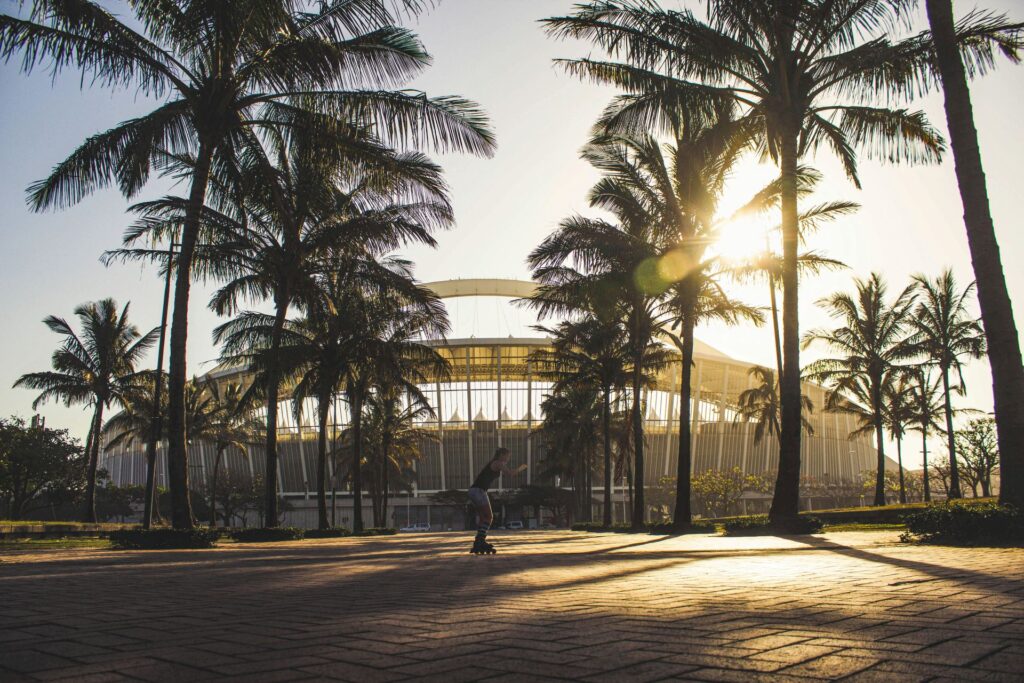
Durban’s Distinct Identity: More Than Just a Beach Town
Durban, or eThekwini as it’s known in Zulu, has always had a distinct personality, shaped by the powerful forces of migration, trade, and tradition. It’s the largest city in KwaZulu-Natal and home to South Africa’s most significant Indian population, a legacy of indentured labourers brought to the region in the 19th century. Their descendants have shaped everything from the city’s food to its architecture and rhythms.
What’s most striking about Durban is how little it tries to emulate Cape Town or Johannesburg. Instead, it leans into its own coastal cadence — slower, more sensual, with a strong undercurrent of spiritual and cultural depth. It’s a city where surfers and sangomas (traditional healers) share space, where colonial remnants sit beside Hindu temples, and where Afro-Indian fusion isn’t a marketing term but a way of life.
The Golden Mile and Beyond: Beach Culture with Substance
At the heart of Durban’s appeal is its incredible beachfront. Stretching from uShaka Marine World to the Suncoast Casino, the Golden Mile is a wide, palm-fringed promenade that hums with joggers, cyclists, street performers, and locals just soaking up the warmth. It’s a city beach experience with real character — surfers catching early-morning waves at North Beach, families braaing under umbrellas, and vendors hawking everything from bunny chow to beadwork.
Durban’s beaches are warm year-round, thanks to the Indian Ocean’s tropical currents, and the water is as swimmable in July as it is in January. This climate alone sets it apart from other South African cities. But for those seeking something more than sun and sand, the newly revitalised Point Waterfront precinct — with its canal cruises, weekend markets, and boutique eateries — adds a layer of sophistication to the city’s surfy persona.
A Culinary Landscape Rich in Spice and Soul
Durban is a paradise for food lovers — especially those with an appetite for spice. The city is the undisputed home of bunny chow, a hollowed-out loaf of bread filled with fiery curry, traditionally eaten with one’s hands. It’s messy, unapologetic, and deeply satisfying. But that’s just the beginning.
The local culinary scene is a layered reflection of Durban’s diverse population. On one street, you’ll find Zulu pot-cooked beef stews; on another, a family-run curry house serving generations-old recipes from Gujarat. From roadside rotis to high-end Afro-Indian tasting menus, the city’s food culture tells a complex story of migration, struggle, celebration, and convergence.
Recent years have seen the rise of Durban’s craft scene too — from artisanal coffee roasters like Lineage and Colombo, to microbreweries and sustainable food markets. The Station Drive Precinct is a great place to explore this modern flavour of Durban, with its collection of studios, galleries, eateries and creative spaces breathing life into old industrial buildings.
Cultural Tapestry: Where Heritage and Innovation Meet
Durban is arguably one of the most culturally layered cities in the Southern Hemisphere. The legacy of the Zulu kingdom is felt in the language, in the fashion, in traditional markets like Warwick Junction — a bustling, chaotic, and utterly fascinating hive of activity where up to half a million people pass through each day. It's the kind of place that challenges and charms in equal measure.
At the same time, Durban’s cultural institutions are evolving. The KwaMuhle Museum offers sobering insight into the city’s apartheid-era history, while the Durban Art Gallery continues to support rising local talent. Across the city, a younger generation of artists, musicians, and designers are blending tradition with modernity, expressing themselves through street art, fashion collectives, and music festivals like Zakifo and the Durban International Film Festival.
Then there’s the architecture. From the Indo-Saracenic façades of the city hall to the deco details of Berea mansions, the built environment tells a complex story — one of colonisation, resistance, and reinvention.
Adventure and Escape: Nature on Durban’s Doorstep
What makes Durban an ideal city break is not just what lies within it, but what surrounds it. Drive 30 minutes inland and you’re in the Valley of a Thousand Hills — a misty, verdant landscape of rolling terrain, rural homesteads, and traditional craft villages. Head north and you’ll hit Umhlanga, with its luxury resorts, pristine beaches, and boardwalks. To the south, there’s the Wild Coast, still untamed and achingly beautiful.
Further afield but easily accessible are the Drakensberg Mountains and Big Five reserves like Hluhluwe–iMfolozi Park, making Durban an excellent base for wider KwaZulu-Natal explorations. You can go from a morning coffee on Florida Road to a sunset game drive in a matter of hours — few urban getaways can offer that level of diversity.
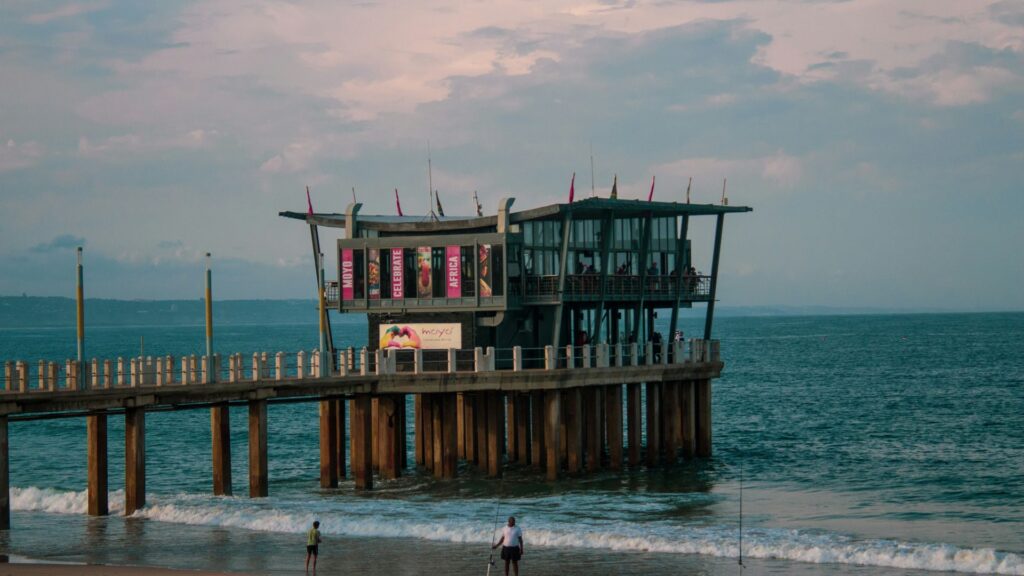
Warmth That Goes Beyond the Weather
Durban’s subtropical climate is a year-round drawcard — balmy winters, hot summers, and ocean breezes that soften the heat. But perhaps the city’s greatest warmth is its people. Durbanites are proud without being brash, welcoming without pretense. There’s a particular generosity of spirit that permeates the city — whether it’s a cab driver giving you a history lesson, a vendor telling you the best way to eat a bunny chow, or a stranger striking up a conversation on the beachfront.
Durban doesn’t try to impress with glossy spectacle. It invites you in slowly — through its layered stories, sensory richness, and moments of authenticity. It’s not a city you consume quickly. It’s a city you feel, gradually, and then carry with you.
The Quiet Renaissance: Urban Renewal Without Erasure
Unlike other cities that often sanitise their urban cores in the name of progress, Durban’s regeneration efforts are rooted in inclusivity and cultural preservation. Initiatives like the Rivertown Precinct — which seeks to transform underutilised spaces into mixed-use cultural corridors — are being shaped with local communities in mind.
Creative entrepreneurship is flourishing too, with collectives like Ikomidi, Woza Moya, and the Durban Is Yours platform giving voice to grassroots talent. Events like the Essence Festival and the East Coast Radio House & Garden Show bring together diverse audiences and contribute to a sense of civic pride and renewal.
There’s still a long way to go in addressing the city’s socioeconomic challenges. But what’s promising is that Durban’s development isn’t about copying global trends — it’s about celebrating local ones.
Where to Stay: Urban Cool Meets Coastal Calm
Accommodation options in Durban have matured considerably in the past decade. You’ll still find family-run B&Bs and resort-style hotels, but there’s a rising tide of boutique properties that combine design flair with local flavour.
The Oyster Box in Umhlanga remains the gold standard for luxury stays, with its colonial charm and ocean-facing elegance. For something more contemporary, The Benjamin Hotel on Florida Road or the Curiocity Hostel near the beachfront offer stylish and affordable digs with a creative twist.
Airbnb options also abound — from lofts in Morningside to cottages in Glenwood — giving visitors the chance to live like a local, even if only for a weekend.
Getting There and Around: Access Without Fuss
Durban’s King Shaka International Airport is efficient and well-connected, with daily flights from all major South African cities and a growing number of regional destinations. The airport is less than 40 minutes from most key attractions, making it ideal for a weekend break.
Within the city, Uber and Bolt make getting around easy, though self-driving is a great option if you plan to explore surrounding regions. Public transport options like minibus taxis and People Mover buses provide local colour and affordability, though they’re best navigated with a bit of local knowledge.
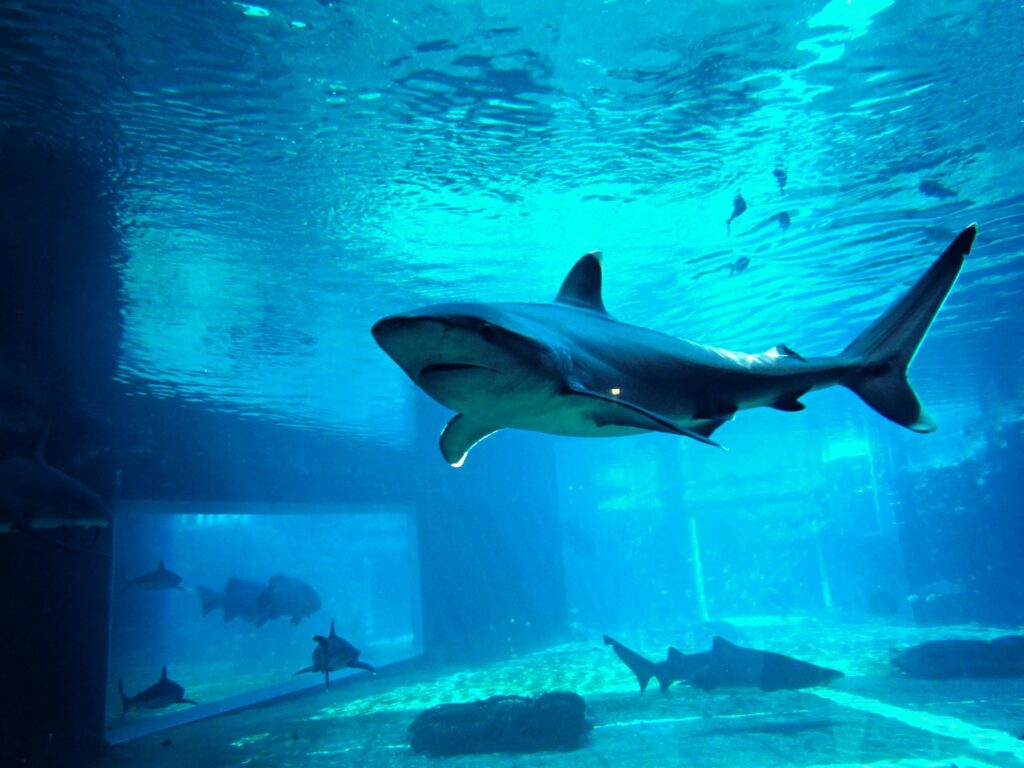
Durban’s Time Is Now
In a world of overtourism and Insta-famous destinations, there’s something refreshing about a city that still feels real. Durban doesn’t pretend to be perfect. It doesn’t offer manicured experiences or curated gloss. What it does offer is heart, texture, and a multi-sensory narrative that is proudly its own.
As South Africans and global travellers alike begin to look for city breaks that go beyond the obvious, Durban’s star is quietly — but unmistakably — on the rise.
If Cape Town is South Africa’s beauty queen, and Johannesburg its business titan, then Durban is its soulful storyteller — warm, complex, deeply human, and long overdue for the spotlight.
Gerald Ferreira
Reporting from the frontlines of the South African tourism renaissance. Bridging the gap between regional stories and global audiences through elite narrative strategy.