

A World That Wakes When We Sleep
By the time the last rays of golden sunlight slip below the horizon and the vast canvas of South Africa’s sky begins to sparkle with stars, a quiet transformation takes place. The savannah hushes, the forests dim, and the bushveld cools. But the darkness does not bring silence—it signals a shift. As diurnal animals tuck away for the night, a secret world stirs. South Africa's nocturnal creatures, honed by evolution to thrive in the shadows, emerge to hunt, forage, communicate, and live out complex lives largely unseen by the human eye.
This is a realm of silent flight, ultraviolet signals, acute hearing, and heat-sensitive sight. From the elusive aardvark to the mythic aardwolf, and the whisper-quiet owls to the agile bush babies, South Africa's night-time ecosystem is a theatre of specialised survival. In this exploration, we delve into the lives, adaptations, and ecological roles of the creatures that reign under the cover of darkness.
Aardvarks: The Underground Architects
The aardvark (Orycteropus afer)—one of South Africa’s most iconic nocturnal residents—is often misunderstood. With its long snout, ears like a rabbit, and body like a pig, the aardvark seems like a mosaic of other animals. But it is uniquely African and singular in its classification. Emerging from its burrow after sunset, the aardvark is a solitary insectivore that spends its nights foraging for termites and ants, which it scoops up with a sticky, muscular tongue that can extend over 30 centimetres.
Its powerful claws allow it to dig into hardened termite mounds with surprising speed. These excavations not only provide it with food but also serve as shelters for other animals once abandoned—making the aardvark an unsung ecological engineer of the bush.
Aardvarks possess poor eyesight, but they compensate with a keen sense of smell and hearing. Their movements are slow and deliberate, carefully listening for the rustle of insects underground. While difficult to spot in the wild due to their shy nature, motion-triggered cameras have revealed just how active and purposeful these creatures are under moonlight.
The Mythic Aardwolf: Ghost of the Grasslands
Closely related to hyenas, yet radically different in diet and disposition, the aardwolf (Proteles cristata) is a gentle insect-eater that roams the dry open plains and savannahs. Unlike its carnivorous cousins, the aardwolf feasts almost exclusively on termites—sometimes consuming up to 200,000 in a single night.
Nocturnal and extremely elusive, aardwolves are often misidentified due to their resemblance to striped hyenas. However, their behavioural patterns are unique. They are monogamous, scent-mark territorial boundaries, and communicate through vocalisations and postures. Their black-and-cream striped coats help them blend into the long grasses during their nighttime outings, while their large ears scan the silence for the click of termite soldiers.
The aardwolf’s presence is an indicator of a healthy termite population, and its survival is tightly interwoven with the delicate balance of its ecosystem.
Owls: Silent Sentinels of the Skies
If there were royalty among South Africa’s nocturnal fauna, owls would be high on the list. With their silent flight, forward-facing eyes, and eerie calls, owls have long fascinated humans—and in African folklore, they often straddle the line between reverence and superstition.
South Africa is home to several owl species, including the majestic Verreaux’s eagle-owl (also known as the giant eagle owl), the tiny pearl-spotted owlet, and the barn owl, easily recognised by its ghostly heart-shaped face.
Owls are apex nighttime predators, feeding on rodents, insects, reptiles, and even small birds. Their ability to fly silently is due to specially adapted feathers that suppress turbulence, while their asymmetrical ears give them exceptional hearing. Each ear picks up sound at a slightly different angle, allowing the owl to pinpoint the exact location of a rustling mouse in pitch darkness.
Their role in rodent control is critical to both wild ecosystems and farmlands. But owls are also under threat—from habitat loss, rodenticides, and human fear. Educating communities about the beneficial role of owls is essential to their continued survival.
Bush Babies: The Acrobats of the Night
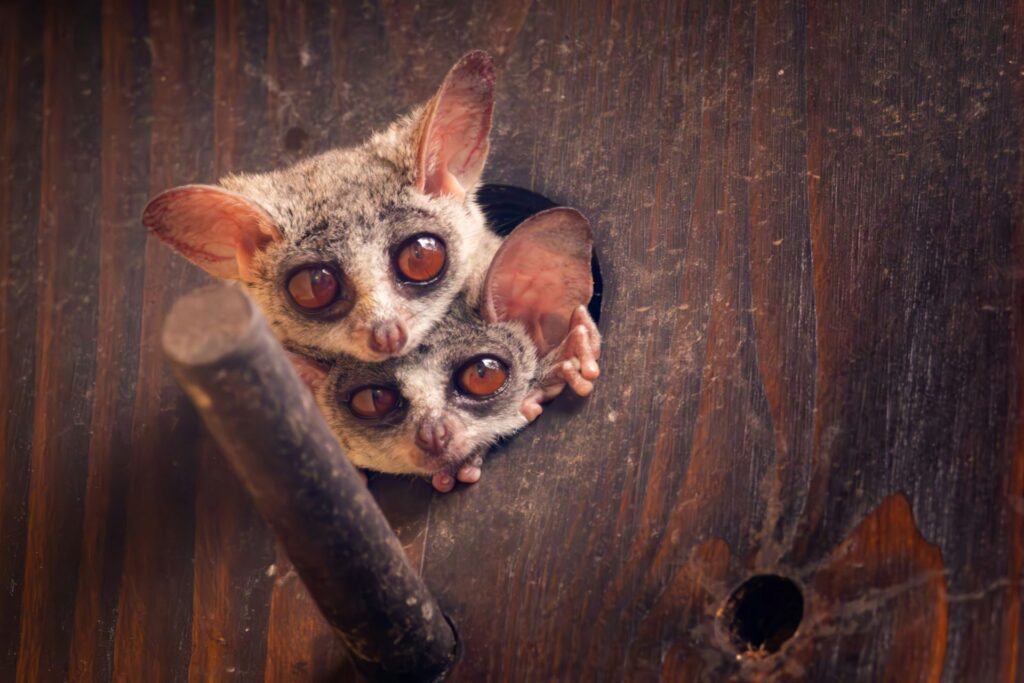
One of the most enchanting sights on a night drive is the sudden gleam of two orange eyes reflecting in the torchlight, followed by the blur of a leap between branches. These are bush babies, or galagos—a group of small, primate species known for their agility, large eyes, and infant-like cries.
South Africa is home to several species, including the thick-tailed bush baby (Otolemur crassicaudatus) and the lesser bush baby (Galago moholi). Despite their size, bush babies are incredibly agile, using strong hind legs and tails for balance and propulsion as they move through the treetops.
Bush babies are nocturnal omnivores, feeding on insects, fruits, tree gum, and small animals. Their huge eyes are adapted for night vision, while their ears are independently mobile—allowing them to locate prey in the dark with uncanny precision.
These creatures are vital pollinators and seed dispersers, contributing to the forest’s health. However, urban encroachment and habitat fragmentation are slowly threatening their numbers, making conservation efforts crucial.
The Elusive Genets and Civets
Often mistaken for cats, genets and civets are actually part of the Viverridae family. Slender, spotted, and long-tailed, these animals are agile and solitary hunters. The common genet (Genetta genetta) is frequently spotted in suburban areas, where it preys on rodents and insects.
Civets, particularly the African civet (Civettictis civetta), are larger and known for producing a musky secretion historically used in the perfume industry. Civets are omnivores, and their diet includes fruits, insects, small mammals, and eggs.
These creatures are predominantly nocturnal, using their sharp senses and stealthy movements to navigate under cover of darkness. They are often caught on camera traps near waterholes and dense undergrowth but are rarely seen in person.
Their role in the food chain is essential—they control pest populations and help scatter seeds, promoting plant diversity.
Bats: The Winged Insectivores
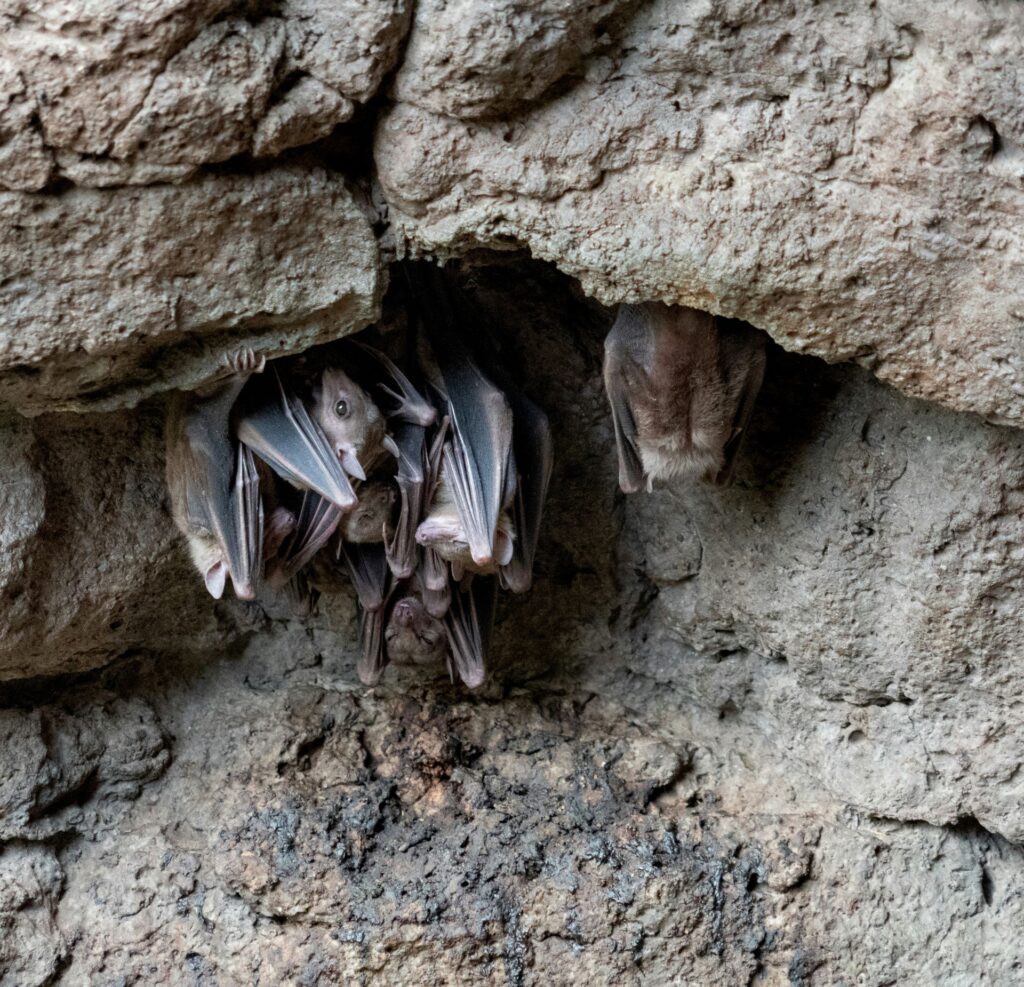
Few animals are as misunderstood as bats. In South Africa, over 60 species of bats flutter through the night skies, playing a crucial role in controlling insect populations and pollinating plants.
Among them are insectivorous microbats like the Cape serotine and the Egyptian slit-faced bat. Using echolocation, these species emit high-frequency sounds and interpret the returning echoes to navigate and hunt with astonishing accuracy.
Fruit bats, like the Egyptian fruit bat (Rousettus aegyptiacus), help pollinate flowers and disperse seeds of indigenous trees. They are particularly important for baobabs, sausage trees, and wild figs—icons of the African landscape.
Despite their ecological importance, bats are vulnerable to persecution, habitat destruction, and disease outbreaks. Conservationists are working to shift public perception, promoting bats as allies in agriculture and biodiversity.
The Lesser Spotted Nightlife: Rodents, Reptiles, and More
Beyond the marquee names of nocturnality are numerous smaller species whose contributions are just as vital. Nocturnal rodents like the porcupine (Hystrix africaeaustralis), cane rat, and springhare quietly forage under cover of darkness, aerating soil and spreading seeds as they move.
Night-active reptiles such as the common egg-eating snake and the gecko come out to feed and thermoregulate. Amphibians, too—like the rain frog and toad species—begin their mating choruses after dusk, particularly after rainfall.
Even invertebrates join the night parade. Scorpions, spiders, and beetles emerge from the earth to feed, mate, and play their role in the ecosystem. Some, like the luminous click beetle, even light up in bioluminescent displays—a magical yet functional adaptation for mating and defence.
The Night’s Biggest Predator: The Leopard
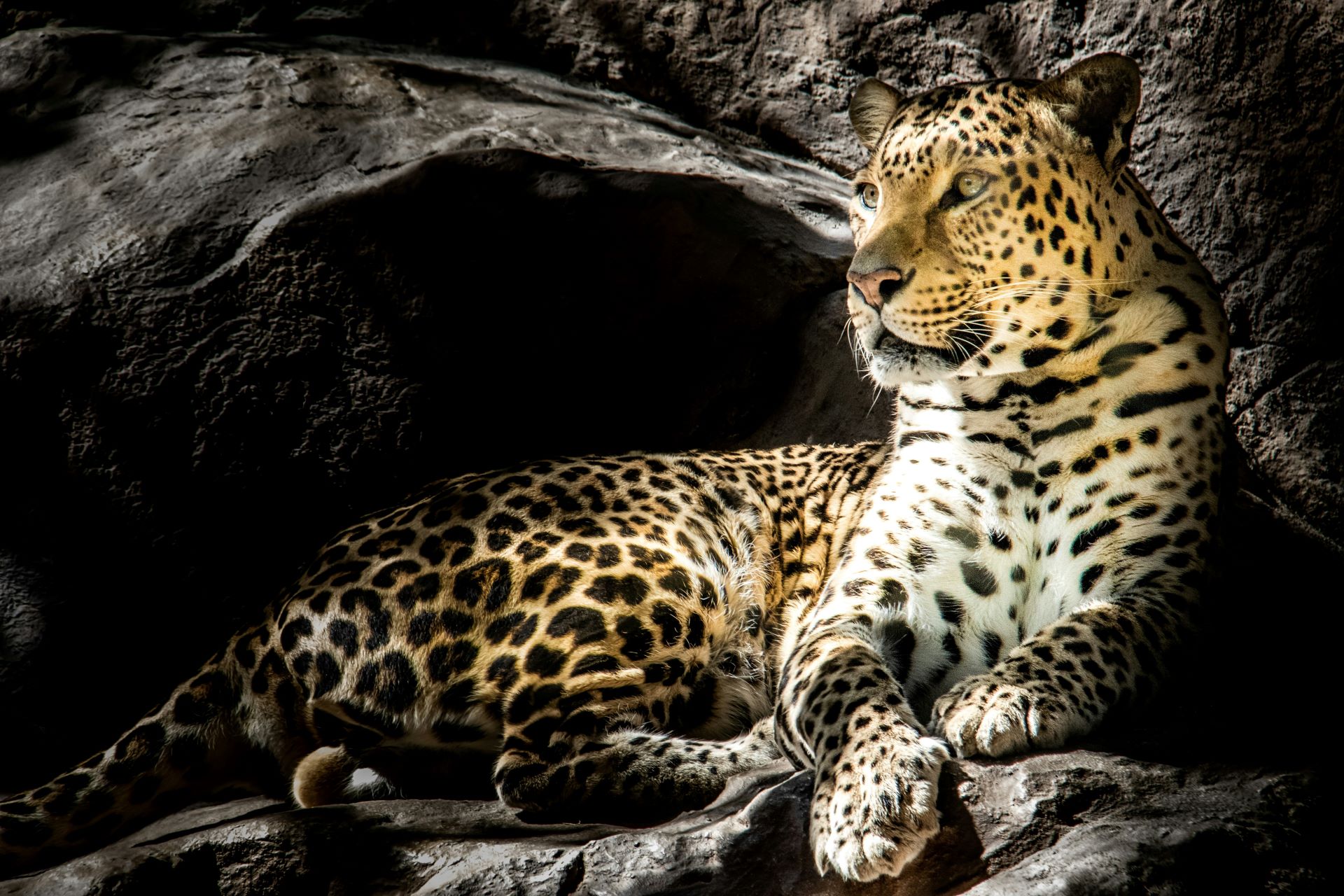
No discussion of South Africa’s nocturnal life would be complete without mention of the leopard (Panthera pardus). Unlike lions, which are both diurnal and nocturnal, leopards prefer to hunt under the cover of darkness. Their stealth, strength, and adaptability make them formidable nighttime predators.
Leopards rely on acute senses of sight and hearing to ambush prey. Their diet is highly variable—from antelope and monkeys to reptiles and birds. Solitary and elusive, they often carry their kills into trees to avoid scavengers.
Leopards are apex predators, and their presence is a strong indicator of ecological health. But human-wildlife conflict continues to threaten their territories, particularly in peri-urban regions where development clashes with wild habitats.
Conservation in the Shadows
Many of South Africa’s nocturnal species remain under-researched due to the obvious difficulties in studying animals that operate while we sleep. Yet, understanding their habits and roles is crucial to conserving the full spectrum of biodiversity.
Camera traps, acoustic monitoring, and satellite telemetry are now giving researchers deeper insight into the behaviours of these elusive creatures. Conservation initiatives—both grassroots and governmental—are also promoting night safaris and eco-tourism experiences that help fund and spread awareness of the creatures that call the night their home.
Community education plays a vital role. Teaching children and adults alike about the benefits of bats, owls, and predators can shift long-held cultural fears into appreciation.
A Night Worth Knowing
When we think of Africa’s wildlife, we often picture the daytime drama of lion prides, elephant herds, or cheetahs chasing prey across sunlit plains. But just as captivating is the theatre that unfolds under the stars. In the darkness, where shadows move and silence pulses with life, South Africa’s nocturnal creatures remind us that half the story of the wild is still being told in whispers.
Their secret lives—subtle, complex, and essential—underscore the richness of the country’s ecosystems. To protect them is not just to save individual species, but to preserve the intricate web of life that continues to thrive when we turn off the lights.
Let me know if you'd like this formatted for web or print, or adapted for a specific audience (e.g. tourism board, wildlife foundation, kids’ educational content).
Gerald Ferreira
Reporting from the frontlines of the South African tourism renaissance. Bridging the gap between regional stories and global audiences through elite narrative strategy.