

South Africa is a land of contrasts — rugged coastlines, sweeping savannahs, and bustling urban centres — but perhaps nowhere are these contrasts more deliciously evident than in its food. To eat in South Africa is to embark on a journey through centuries of history, migration, and creativity, where every bite tells a story. From indigenous ingredients to colonial influences and modern culinary innovation, the country’s cuisine is a vibrant tapestry that celebrates its people, land, and heritage.
Cape Malay Magic: The Heartbeat of Cape Town
In the colourful streets of Bo-Kaap, Cape Town, the aroma of fragrant spices drifts from pastel-painted homes, hinting at a culinary history shaped by migration. Cape Malay cuisine, born from the forced migrations of slaves from Southeast Asia during the 17th and 18th centuries, has left a lasting legacy on South African kitchens.
Here, fragrant curries meet the subtle sweetness of apricots and raisins. Biryani is a feast of layered rice and tender meats, aromatic with cardamom, cinnamon, and clove. Bobotie, a baked minced meat dish topped with an egg custard, balances savory and sweet in a way that is distinctly Cape Malay. These dishes are not just food; they are a bridge to the past, a living memory of resilience and adaptation.
Walking through Bo-Kaap’s cobbled streets, it’s impossible not to be drawn into kitchens where the sizzle of sambals and the warmth of freshly baked koeksisters — syrup-drenched twisted doughnuts — offer more than sustenance. They offer a taste of history, a connection to generations who crafted flavour with heart and ingenuity.
Wild Flavours of the Bushveld
Travel inland to the bushveld, and the culinary landscape transforms. Here, the land itself dictates the menu. Indigenous ingredients like marula, mongongo nuts, and baobab fruit have been staples for centuries, treasured for their nutritional value and earthy flavours. South Africa’s game meats — kudu, springbok, and ostrich — tell a story of hunting traditions and sustainable practices that are increasingly finding their way into modern gastronomy.
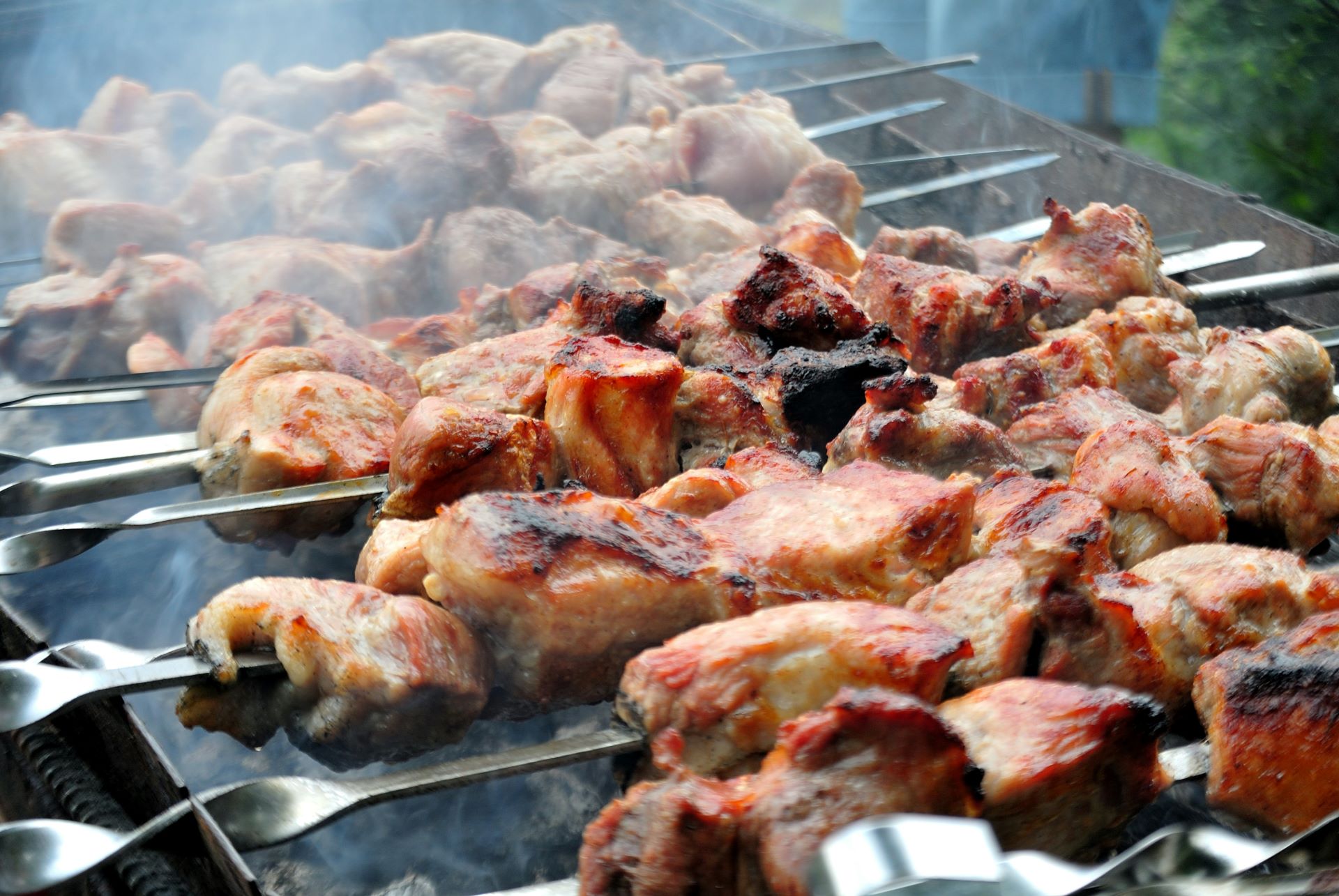
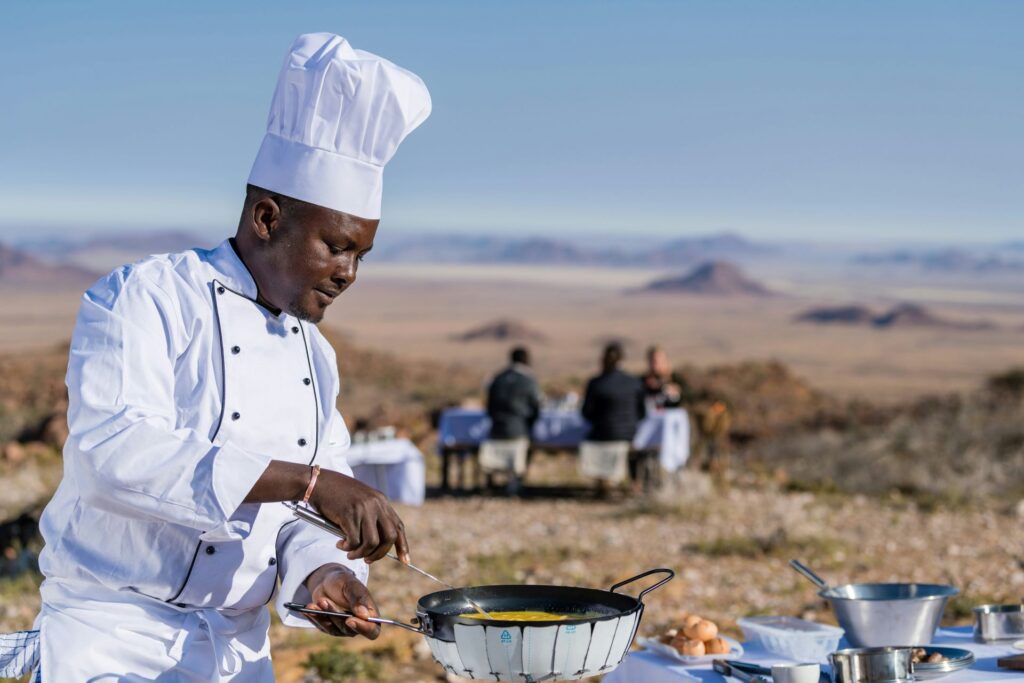
Safari lodges across Limpopo and Mpumalanga often serve braaied (barbecued) meats seasoned simply with local herbs, letting the natural flavours shine. Guests are encouraged to explore foraged mushrooms, wild herbs, and indigenous vegetables, each dish a reflection of the bushveld’s rich biodiversity. Dining under the vast African sky, with fireflies dancing and the distant call of wildlife, the meal becomes an immersive celebration of the land.
The Coastal Harvest: Seafood Along the Eastern and Western Shores
South Africa’s extensive coastline offers a bounty of seafood, and each region has cultivated its own culinary identity. On the Eastern Cape, the Indian Ocean gifts succulent line fish and prawns, often prepared with a gentle blend of local spices that speak to centuries of Indian Ocean trade routes. In Durban, bunny chow — a hollowed-out loaf of bread filled with spicy curry — has emerged as a street-food icon, reflecting the city’s vibrant Indian heritage.
On the Western Cape, the cold Atlantic currents yield crayfish, abalone, and mussels, often paired with wines from the nearby vineyards. Here, chefs craft dishes that are elegant yet unpretentious, letting freshness and seasonality take centre stage. A plate of freshly shucked oysters on a crisp winter’s morning, accompanied by a glass of Chenin Blanc, is a sensory celebration of the ocean’s generosity and the land’s winemaking prowess.
From Farm to Fork: The Winelands and Culinary Innovation
The Cape Winelands are not only a feast for the eyes but also for the palate. Rolling vineyards stretch as far as the eye can see, punctuated by centuries-old estates where culinary experimentation thrives alongside tradition. Chefs draw inspiration from the surrounding valleys, sourcing ingredients from family-run farms and artisanal producers.
Here, indigenous grains like sorghum and ancient vegetables such as the wild spinach (amaranth) meet innovative techniques in modern kitchens. Wine pairing is elevated to an art form, with local varietals like Pinotage and Sauvignon Blanc accentuating the nuances of each dish. Seasonal markets in Stellenbosch and Franschhoek brim with fresh produce, cheese, charcuterie, and artisanal bread, inviting travellers to taste the region with their own hands.
Township Tables: Community, Creativity, and Culture
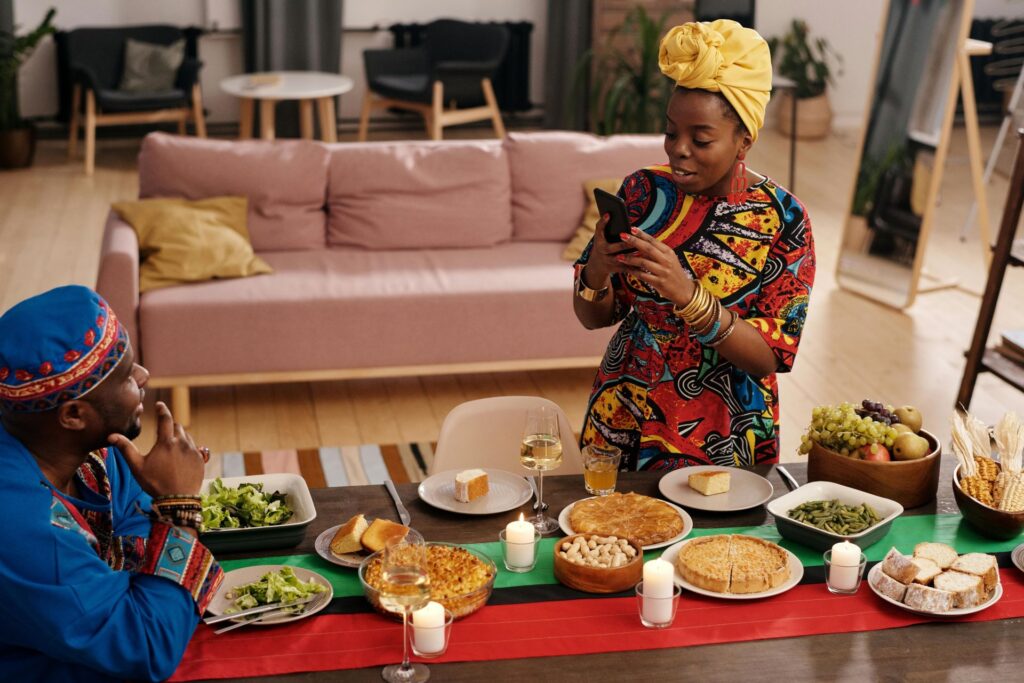
South Africa’s townships are vibrant hubs of culinary ingenuity, where communal spirit and creativity flourish. In Soweto, Johannesburg, chefs reimagine traditional dishes such as chakalaka — a spicy vegetable relish — and pap, a coarse maize porridge, infusing them with new life while preserving authenticity. Street vendors offer boerewors rolls, sizzling under the midday sun, while markets echo with laughter, music, and the scents of freshly grilled meat.
Here, food is more than nourishment; it is storytelling. Every family recipe carries tales of migration, adaptation, and resilience. Participating in a township food tour is an intimate experience, where chefs and home cooks alike share their heritage, demonstrating that South African cuisine is a communal celebration of life itself.
Indigenous Ingredients: A Legacy Reclaimed
South Africa’s culinary identity is deeply rooted in its indigenous ingredients, many of which are experiencing a renaissance in modern kitchens. Rooibos, harvested from the fynbos of the Western Cape, has evolved from humble herbal tea to a global phenomenon, its earthy notes appearing in desserts, sauces, and cocktails. The marula fruit, prized for its sweet, tart flavour, finds its way into jams, liqueurs, and innovative culinary creations.
Baobab powder, rich in vitamin C, lends a tangy brightness to breads and smoothies, while wild herbs such as buchu enhance both savoury and sweet dishes. By embracing these native ingredients, chefs are reclaiming a culinary heritage that was often overshadowed by colonial imports, offering travellers a taste that is uniquely South African and rooted in the land itself.
The Sweet Side of South Africa
No journey through South African cuisine is complete without a foray into its desserts. From the syrupy, twisted koeksisters of the Cape to the nut-studded milk tarts enjoyed across the country, sweets tell stories of resourcefulness and adaptation. Malva pudding, with its golden sponge soaked in apricot-infused syrup, is a warm reminder of comfort and hospitality.
At high-end patisseries and local bakeries alike, chocolate, caramel, and indigenous fruits are reimagined with flair. Honeybush and rooibos infusions appear in custards, mousses, and gelatos, blending traditional flavours with contemporary techniques. Here, dessert is not an afterthought — it is a crescendo of South Africa’s culinary symphony.
Culinary Festivals: A Celebration of Heritage
Across the country, food festivals bring South Africa’s culinary diversity to life. The Knysna Oyster Festival celebrates the region’s marine bounty, while the Good Food & Wine Show in Cape Town showcases both tradition and innovation. In Gauteng, street-food markets pulse with energy, offering everything from artisanal cheeses to globally inspired fusion dishes.
These festivals are more than gastronomic events; they are cultural exchanges, where locals and travellers alike immerse themselves in South Africa’s food heritage. Storytelling, music, and culinary demonstrations accompany the tasting, ensuring that every flavour is contextualised within the country’s rich cultural tapestry.
A Culinary Journey Beyond the Plate
South African cuisine is a journey, not just a meal. It invites travellers to explore its landscapes, understand its history, and engage with its communities. Every dish, every ingredient, every shared meal is an invitation to experience the country’s soul.
From the spiced streets of Bo-Kaap to the wilds of the bushveld, the windswept coasts to the vineyards of the Winelands, South Africa’s food is a living testament to resilience, creativity, and diversity. For the traveller with a curious palate, the country offers a culinary adventure that is as rich and varied as its people, history, and landscapes.
To eat in South Africa is to taste history, to embrace culture, and to savour life itself. It is a journey of flavours that lingers long after the last bite, echoing the rhythm of a nation that celebrates its past while innovating for the future.
Gerald Ferreira
Reporting from the frontlines of the South African tourism renaissance. Bridging the gap between regional stories and global audiences through elite narrative strategy.