

South Africa is a country best understood on foot. From jagged mountain escarpments to wave-lashed coastlines and forests older than memory, the land reveals itself slowly, step by step, to those willing to walk it. Hiking here is not simply a recreational activity; it is a deeply immersive way to experience the country’s geography, biodiversity, and cultural layers.
For travellers, hiking offers a rare intimacy with place. It allows you to feel the shift from dry fynbos to misty forest, to watch the ocean change colour with the light, and to hear nothing but wind, birdsong, and your own breathing. South Africa’s trail network is vast and varied, catering to casual walkers, committed hikers, and seasoned adventurers alike. What makes it exceptional is not just the scenery, but the accessibility. Many of the country’s most dramatic landscapes are reachable without technical climbing skills, expensive gear, or weeks of planning.
This is a country where you can summit a world-famous mountain in the morning, walk through ancient forest by midday, and finish the day watching the sun sink into the ocean from a cliffside path. For travellers seeking connection, challenge, and unforgettable views, these hiking trails represent some of South Africa’s most rewarding experiences.

Mountain Trails That Define the Landscape
South Africa’s mountains shape its skyline and its sense of scale. They rise abruptly from plains, fold into each other in dramatic ridges, and dominate the regions they occupy. Hiking in these environments is as much about perspective as it is about physical effort.
The Drakensberg, stretching across KwaZulu-Natal and into the Eastern Cape, is the country’s most formidable mountain range. Its basalt cliffs, known as the uKhahlamba, meaning “barrier of spears”, feel both imposing and magnetic. Hiking here ranges from gentle valley walks to demanding ascents that test endurance and navigation skills.
One of the most accessible yet visually spectacular routes is the Amphitheatre hike via the Sentinel. While the climb includes chain ladders and steep sections, it remains achievable for fit hikers with a head for heights. The reward is a view over the Tugela Falls, which tumble dramatically down the escarpment after summer rains. Standing on the plateau, with clouds drifting below your feet, feels like stepping into a different world.
For travellers looking for a less exposed but equally rewarding experience, Cathedral Peak and Monk’s Cowl offer well-maintained trails with varied difficulty. These routes pass through grassy slopes, indigenous forests, and rocky ridges, often accompanied by the distant sound of water and the sight of eland grazing on steep inclines. Accessibility is enhanced by nearby resorts and camps, making the Drakensberg an excellent option for travellers new to multi-day hiking.
In the Western Cape, the Cederberg Mountains present a starkly different mountain environment. Here, the landscape is shaped by wind and time, with red sandstone formations carved into arches, cracks, and towers. Hiking in the Cederberg is less about altitude and more about atmosphere. Trails like Wolfberg Cracks and Wolfberg Arch challenge hikers with scrambling and exposure, but the effort is rewarded with views that feel almost otherworldly.
The Cederberg’s appeal extends beyond scenery. Rock art sites hidden along hiking routes offer glimpses into the lives and beliefs of the San people who once inhabited the region. Walking these trails carries a quiet sense of respect and reflection, reminding travellers that these mountains have long been places of shelter, ritual, and survival.
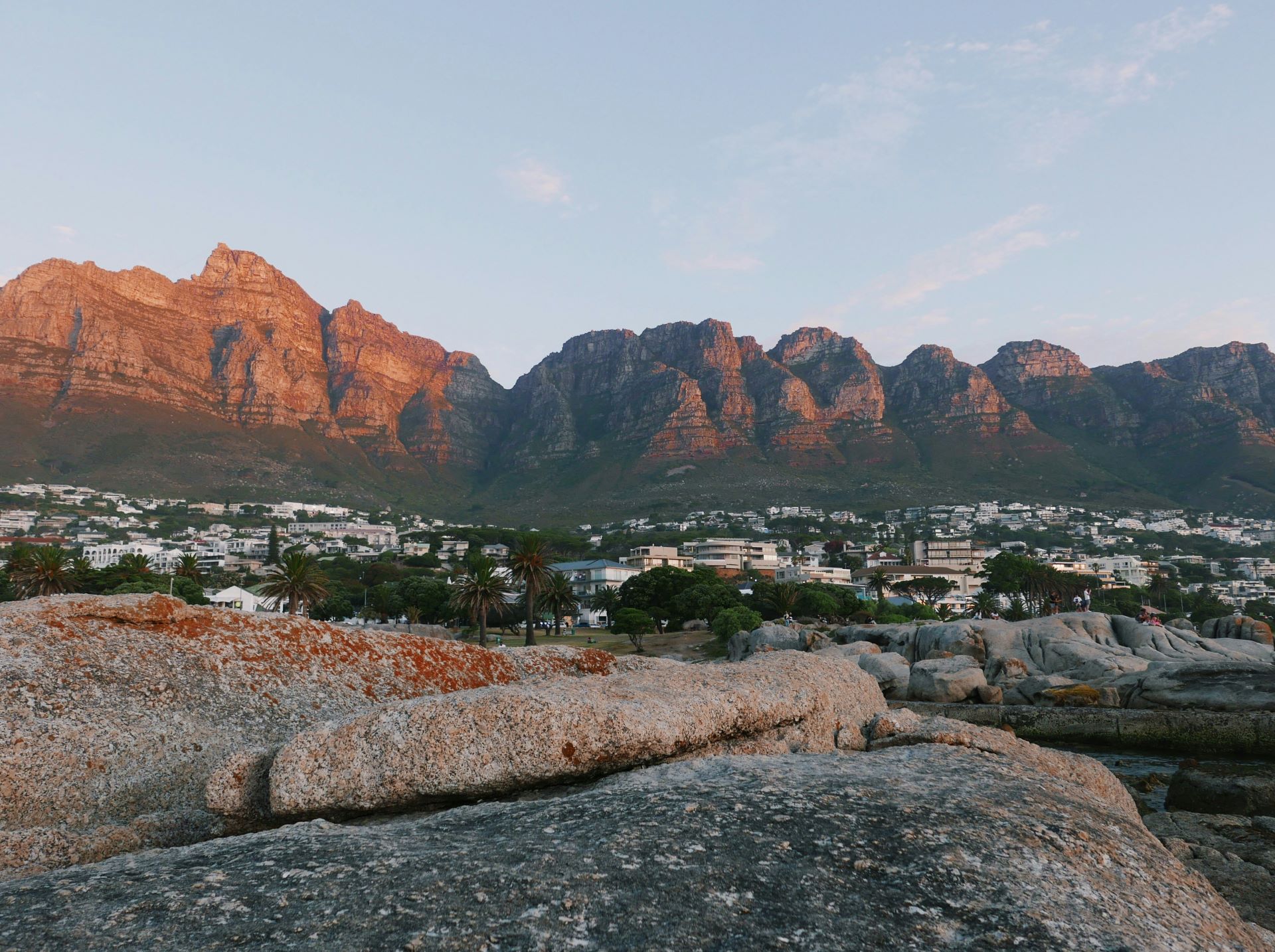
Table Mountain, perhaps South Africa’s most recognisable landmark, proves that urban hiking can be just as compelling as remote wilderness. Rising above Cape Town, it offers an array of routes that cater to different fitness levels and interests. Platteklip Gorge remains the most direct and popular ascent, a steep but straightforward climb that rewards persistence with sweeping views across the city and coastline.
For those seeking a more varied experience, routes like Skeleton Gorge or India Venster introduce forested sections, scrambling, and dramatic cliffside views. What makes Table Mountain exceptional is its accessibility. Public transport, cable car options for descent, and clearly marked trails allow travellers to experience a world-class hike without leaving the city behind.
Coastal Routes Where the Ocean Leads the Way
South Africa’s coastline stretches for thousands of kilometres, and its hiking trails follow the contours of cliffs, dunes, and beaches where land and sea collide. Coastal hiking offers constant visual drama, with changing light, crashing waves, and the possibility of wildlife encounters both on land and offshore.
The Otter Trail in Tsitsikamma National Park stands as the benchmark for coastal hiking in South Africa. Spanning roughly 42 kilometres over five days, it is not an easy walk. River crossings, steep climbs, and exposed sections demand preparation and physical fitness. Yet the trail’s popularity endures because of its unmatched beauty.
Each day reveals a new stretch of coastline, from dense indigenous forest to rocky shores and untouched beaches. Hikers often spot dolphins playing in the surf, while whales migrate past the coast during the winter months. Overnight huts perched above the ocean provide moments of quiet reflection as waves crash below and stars fill the sky.
For travellers unable to commit to a multi-day hike, Tsitsikamma still offers shorter trails that capture the essence of the region. The Storms River Mouth suspension bridge walk provides an accessible introduction, combining forest paths with dramatic views over a narrow gorge where the river meets the sea.
Further west, the Garden Route offers a series of coastal paths that blend hiking with leisure. The Robberg Nature Reserve in Plettenberg Bay features circular routes of varying lengths and difficulty. The longer trails follow the peninsula’s edge, where cliffs plunge into the ocean and seals bask on rocky outcrops below. These hikes are challenging enough to feel rewarding but remain accessible to most travellers with moderate fitness.
In the Western Cape, the Cape Peninsula offers coastal hiking at its most dramatic. Trails in the Cape Point Nature Reserve trace rugged headlands where the Atlantic and Indian Oceans seem to converge. The Shipwreck Trail and the walk to Cape Point lighthouse combine historical intrigue with sweeping ocean views. Strong winds and sudden weather changes add an element of unpredictability, reminding hikers to respect the power of the coastal environment.
Closer to Cape Town, routes like Chapman’s Peak and the Pipe Track offer panoramic views without requiring full-day commitments. These paths are popular for good reason, blending accessibility with scenery that ranks among the finest urban coastal hikes in the world.
Forest Trails and the Rhythm of the Wild
South Africa’s forests are pockets of quiet, offering a contrast to the exposed drama of mountains and coastlines. Hiking here is slower, more introspective, shaped by dappled light, earthy scents, and the constant presence of life.
The indigenous forests of the Garden Route are among the most celebrated. Tsitsikamma and Knysna forests are home to towering yellowwoods, ancient trees that have witnessed centuries of change. Trails wind beneath dense canopies, crossing streams and following the contours of valleys shaped by water and time.
The Jubilee Creek trail in Knysna Forest offers a satisfying day hike, with moderate climbs and rewarding views over forested hills. The presence of birdlife is constant, from the call of the Knysna loerie to the rustle of smaller species moving through the undergrowth. Occasional clearings reveal pools and waterfalls, inviting hikers to pause and absorb the surroundings.
Further inland, the forests of Mpumalanga present a different character. The Blyde River Canyon Nature Reserve combines forested trails with dramatic viewpoints overlooking one of the world’s largest green canyons. Hikes here vary in difficulty, but even shorter walks provide access to viewpoints where rivers snake through lush landscapes far below.
In KwaZulu-Natal, the mistbelt forests of the Midlands offer gentle hiking options well suited to travellers seeking restorative experiences. Trails here focus less on distance and more on immersion, with well-maintained paths, wooden walkways, and interpretive signage that adds depth to the journey.
Trails That Welcome Every Traveller
One of South Africa’s greatest strengths as a hiking destination is inclusivity. Not every traveller arrives with technical gear or mountaineering ambitions, and the country’s trail network reflects this reality.
National parks, nature reserves, and private conservancies have invested in routes that cater to beginners, families, and travellers with limited time. Boardwalks, loop trails, and guided walks make it possible to experience remarkable environments without advanced skills or intense physical exertion.
Places like Kirstenbosch National Botanical Garden demonstrate how accessibility and beauty can coexist. The Boomslang treetop walkway allows visitors to experience the forest canopy, while surrounding paths lead into the eastern slopes of Table Mountain. These routes are ideal for travellers wanting a gentle introduction to hiking without sacrificing scenery.
Similarly, coastal boardwalks in areas like Wilderness and St Lucia provide access to estuaries, dunes, and beaches, ensuring that even short walks leave lasting impressions.
Planning for South African Hiking Conditions
Hiking in South Africa requires respect for both environment and climate. Conditions can change quickly, particularly in mountainous and coastal regions. Summer brings heat, afternoon thunderstorms, and swollen rivers, while winter introduces cold temperatures, snow in higher elevations, and shorter daylight hours.
Preparation is essential, even for seemingly straightforward routes. Carrying water, sun protection, and basic navigation tools is non-negotiable. Travellers should always check local weather forecasts and trail conditions, and when in doubt, seek advice from park authorities or local guides.
Accessibility varies across regions. While many popular trails are well-marked and supported by infrastructure, more remote routes demand self-sufficiency and experience. For international travellers, guided hikes can offer a balance between safety and immersion, providing insight into local ecology and history along the way.
Why Hiking Belongs on Every South African Itinerary
To hike in South Africa is to engage with the country at its most honest. Trails cut through landscapes shaped by geological forces, cultural histories, and ecological resilience. They reveal connections between people and place that are often missed from behind a car window.
For travellers, hiking offers more than physical challenge. It creates moments of stillness, of effort rewarded, of shared experience with strangers who become companions on the path. It encourages a slower pace, one that aligns with the rhythms of the land rather than the urgency of schedules.
South Africa’s hiking trails invite travellers to step into stories written in stone, water, and forest. Whether standing on a mountain plateau, following a coastal path beside the sea, or walking beneath ancient trees, each trail becomes a journey of discovery.
In a country defined by diversity, hiking is the thread that ties landscapes together. It is an invitation to explore deeply, respectfully, and with open eyes. For any traveller seeking meaningful connection with South Africa, the trail begins just beyond the next step.
Elisha Roodt
Reporting from the frontlines of the South African tourism renaissance. Bridging the gap between regional stories and global audiences through elite narrative strategy.