

While Cape Town commands the world’s gaze and Johannesburg pulses with the country's economic heartbeat, Durban hums with a quieter confidence. Tucked along South Africa’s eastern seaboard, this coastal city is more than just a summer getaway or a cricket test match destination. It is a living mosaic of cultures, cuisines, and coastal cool that many South Africans overlook — and shouldn’t.
Durban, the gateway to KwaZulu-Natal, is arguably Africa’s most underrated coastal metropolis. With the balmy Indian Ocean lapping at its golden shores, an intoxicating blend of Zulu, Indian, and colonial heritage, and an emerging culinary and creative scene, Durban offers an authentic urban escape without the pretentious gloss.
This isn’t just a story about beaches and bunny chows. It’s a rediscovery of one of South Africa’s most complex and compelling cities — one that deserves far more than a fly-by holiday.
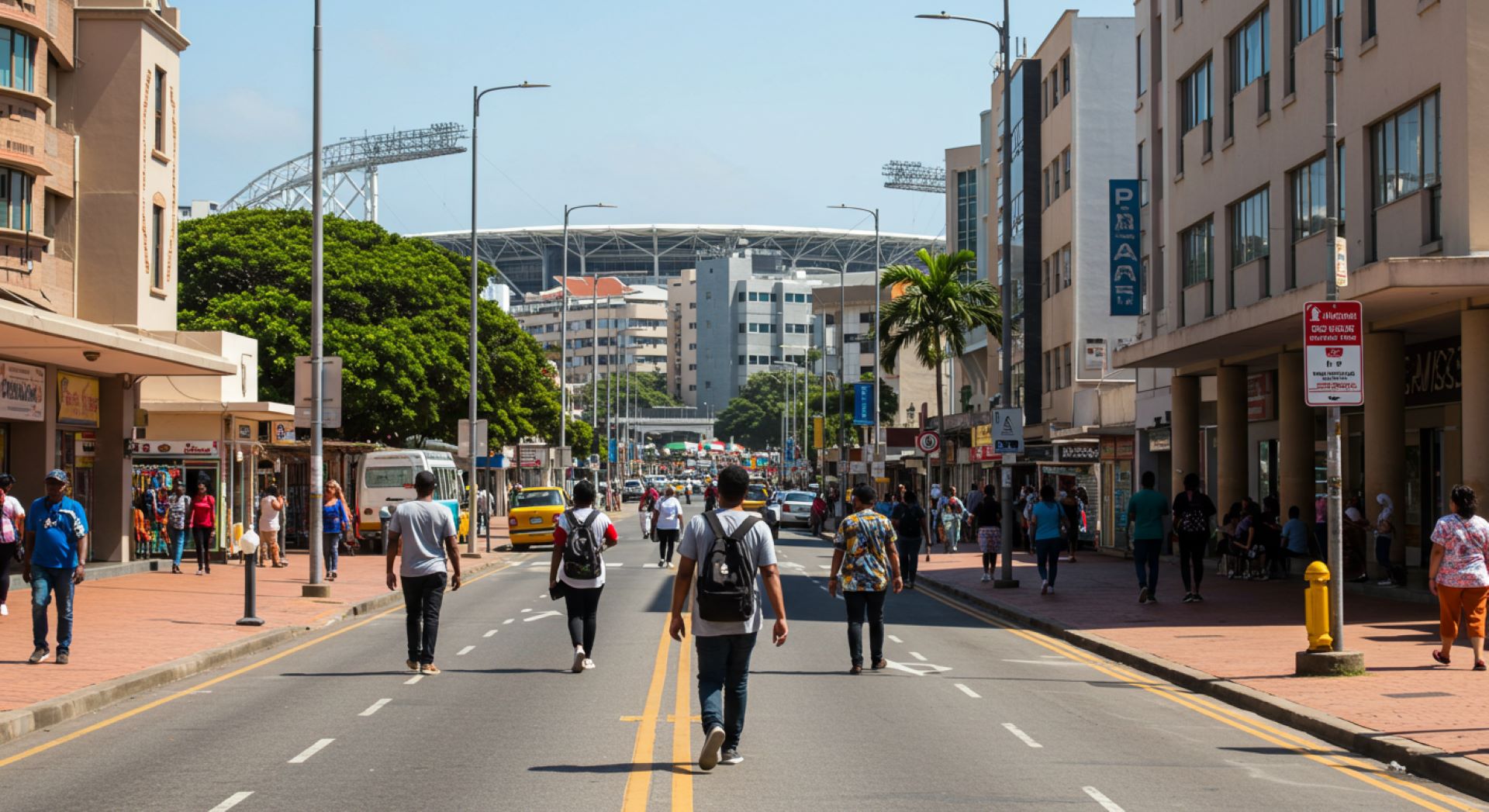
The City Where Cultures Collide — and Coexist
At the heart of Durban’s appeal lies its cultural fusion. The city is home to the largest Indian population outside of India, a legacy of indentured labour that began in the 1860s. Today, Indian and Zulu cultures stand shoulder-to-shoulder, often in symbiotic contrast, creating an atmosphere that is unmistakably Durban.
Wander through the bustling Warwick Triangle markets — not just a photographer’s dream, but an anthropological treasure. Here, traditional Zulu medicine stalls (muti markets) share space with sari shops and spice vendors. Visit the Juma Masjid Mosque, the largest in the southern hemisphere, and then walk a few blocks to a shebeen playing gqom beats under a Nelson Mandela mural.
This is where tradition and innovation don’t merely coexist — they inspire one another.
The Indian Ocean’s Urban Playground
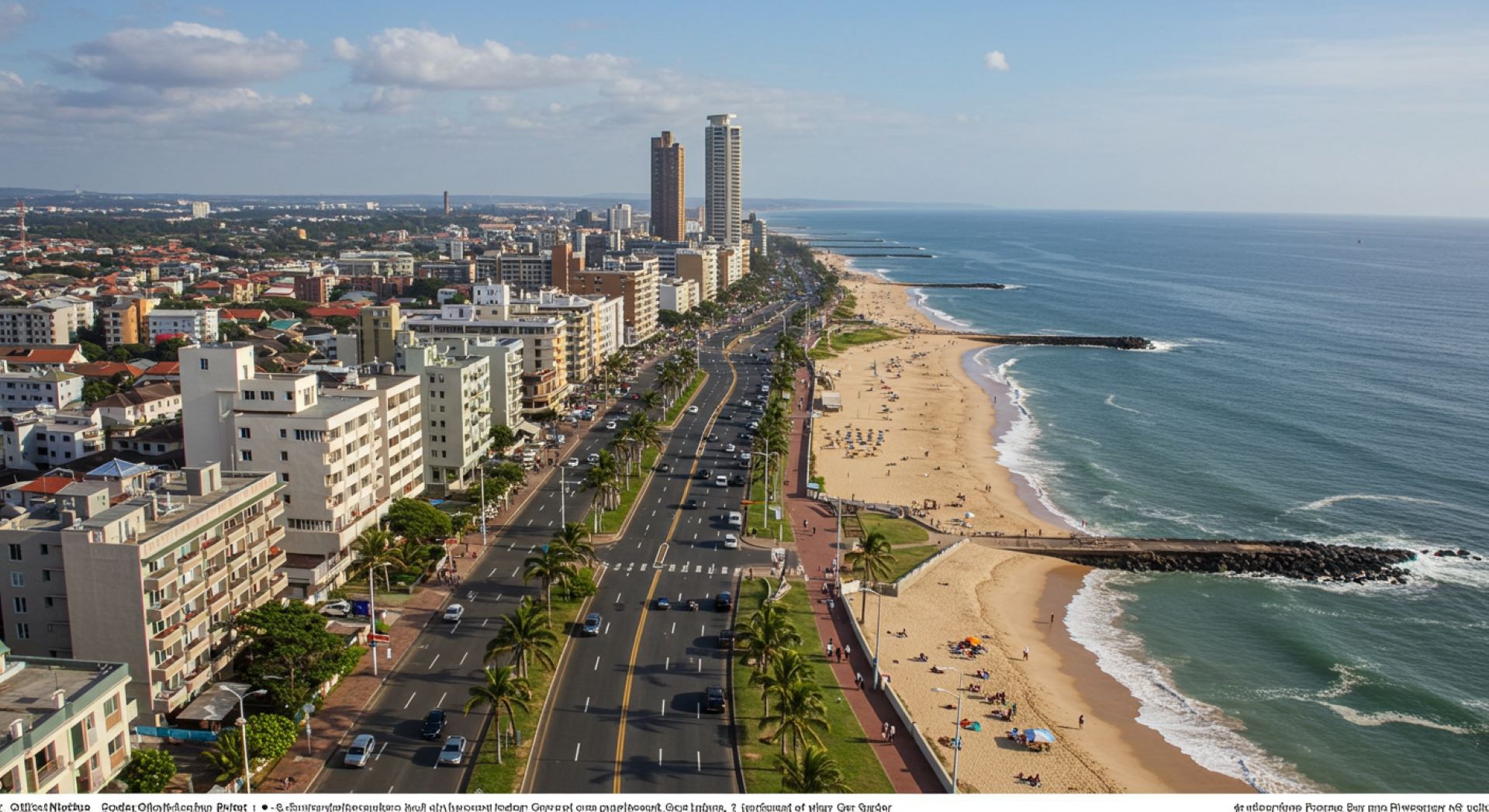
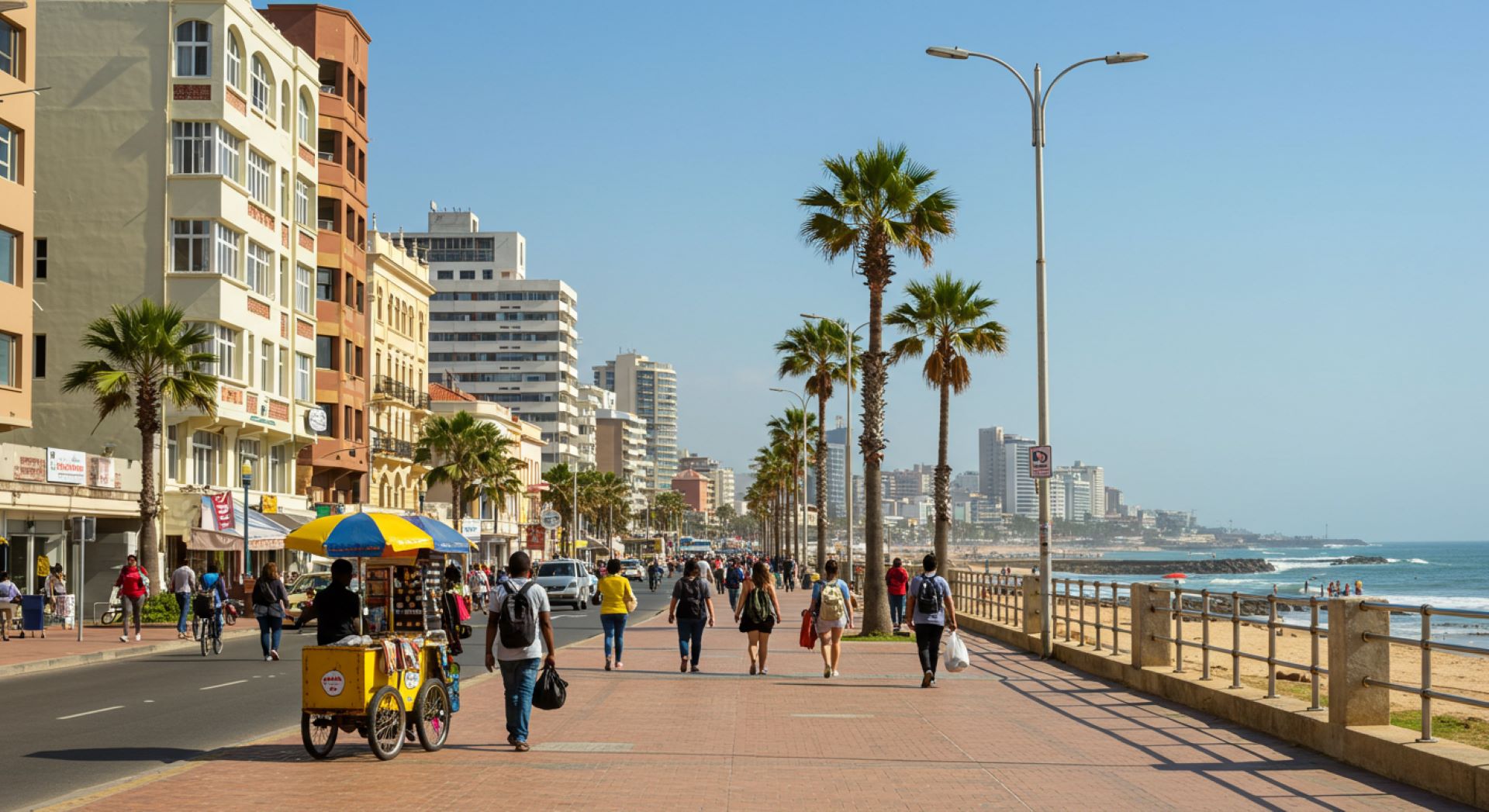
Durban’s subtropical climate means beach days are not bound by summer. The Golden Mile, the stretch of sun-kissed beachfront from uShaka Marine World to the iconic Moses Mabhida Stadium, is where the city collectively exhales.
Surfers glide on morning swells at North Beach. Cyclists and joggers cruise the beachfront promenade. At Blue Lagoon, families gather for weekend braais, blending urban energy with nature’s balm.
But Durban isn’t just about sun and sand. The beachfront has evolved into a cultural artery — from the skate park near Bay of Plenty to beachfront cafés serving masala-dusted prawns and vegan bunny chows.
A Culinary Underdog Rising
Cape Town may be South Africa’s culinary darling, but Durban’s food scene is quietly undergoing a renaissance. Long known for its spicy Indian fare — bunny chows, breyanis, and samoosas — the city’s dining identity is now broader, more experimental, and undeniably exciting.
The Classics: You haven’t experienced Durban until you’ve devoured a bunny chow from Little Gujarat or Gounden’s. These half-loaves of bread brimming with fiery curry are more than food; they’re a cultural rite.
The Innovators: Restaurants like The Chefs’ Table in Umhlanga and 9th Avenue Waterside in the Point Waterfront area are pushing boundaries with globally-inspired cuisine that still whispers KwaZulu-Natal authenticity.
The Hidden Gems: From Pakistani roadside grills in Overport to Zulu braai spots in Umlazi and Congolese eateries in the city centre — Durban’s culinary DNA is vast, layered, and still deliciously undiscovered.
Art, Music, and the Rise of Durban Cool
For years, Durban artists were seen as the stepchildren of South Africa’s creative scene. No longer.
The city’s underground art and music movements are thriving — gritty, grassroots, and gloriously unapologetic. Galleries like the African Art Centre and KZNSA are nurturing bold local talent, while street murals tell stories of identity, resistance, and resilience.
Musically, Durban is the birthplace of gqom — the raw, bass-heavy electronic genre that has exploded internationally. What began in bedrooms and backrooms in KwaMashu and Umlazi now reverberates across Paris and London nightclubs. Local festivals such as the Durban International Film Festival and Zakifo Music Festival highlight the city’s cultural depth far beyond its shores.
Durban isn’t chasing trends — it’s making them.
Nature at Your Doorstep
Durban’s proximity to nature is another of its charms. You’re never far from a wilderness experience.
Just 20 minutes inland lies the Valley of a Thousand Hills, where the verdant rolling landscape tells stories of ancient Zulu kings and colonial outposts. Further afield, the Drakensberg Mountains and iSimangaliso Wetland Park offer world-class hiking, birding, and big-five safaris within a few hours’ drive.
Within the city itself, the Durban Botanic Gardens — Africa’s oldest surviving botanic garden — offers a lush, tranquil escape. And for those who seek a more adrenaline-fuelled version of nature, try microlighting over the coast, shark diving at Aliwal Shoal, or mountain biking through Giba Gorge.
Beyond Umhlanga: A Tale of Two Durbans
While Umhlanga Rocks has long been Durban’s glossy calling card — all five-star hotels, gated estates, and affluent shopping promenades — the true soul of the city lies beyond.
Neighbourhoods like Glenwood, Morningside, and The Point Waterfront are where creativity is fermenting. Glenwood’s coffee shops and bookstores feel like Cape Town without the smugness. Morningside’s bars are packed with university students, startup founders, and artists debating over craft beers and amasi cocktails.
And the rejuvenation of The Point Waterfront, once neglected, now boasts high-end apartments, eateries, and one of the continent’s most dramatic pier walks.
The city’s regeneration is not without complexity — issues of gentrification and inequality persist — but the narrative is changing. Slowly, confidently.
The Spirit of eThekwini: Resilience in the Face of Adversity
Durban’s story is not all sunshine and surf. The city has weathered floods, political unrest, and systemic inequality. But its spirit — the spirit of eThekwini — is unyielding.
From informal traders who return every morning to rebuild their stalls, to community organisers reshaping townships through education and art, Durban is a case study in resilience.
Perhaps this is what makes the city so magnetic: its beauty is not only aesthetic, but also rooted in tenacity and transformation.
Why Durban Now?
Durban is not trying to be the next Cape Town or Johannesburg — and that’s its superpower.
It is a city of nuance and narrative. A place where surfboards and prayer mats exist on the same beach. Where history and hip-hop bleed into each other. Where your most memorable meal may be eaten from a paper bag on a park bench, or in a Michelin-style kitchen with a view of the Indian Ocean.
For South African travellers seeking authenticity over artifice, substance over spectacle — Durban awaits.
Not with a shout, but with a sun-drenched, spice-scented whisper that says, you’ve been looking elsewhere for too long.
Travel Tips for the Curious Explorer
Durban At a Glance
Durban has always been here. Maybe now’s the time we truly see it.
Jabulani
Reporting from the frontlines of the South African tourism renaissance. Bridging the gap between regional stories and global audiences through elite narrative strategy.