

South Africa is often hailed as a “world in one country” — a sweeping geographical mosaic where ancient landscapes, dramatic coastlines, and hidden subterranean worlds converge. Beyond the Big Five and postcard safaris, the country's natural wonders stretch far deeper, offering intrepid explorers a rich array of awe-inspiring sites shaped over millions of years.
From the mysterious echo of underground caves to the thunderous clash of oceans along rugged coastlines, South Africa’s natural wonders are as diverse as they are breathtaking. Here’s a journey through the country’s most remarkable and lesser-known geological marvels — a celebration of nature’s artistry, and the stories etched into its stones.
The Cango Caves: South Africa’s Subterranean Cathedrals
Tucked into the foothills of the Swartberg Mountains near Oudtshoorn in the Western Cape lies one of Africa’s most captivating underground treasures — the Cango Caves. These vast limestone chambers, sculpted over 20 million years, offer a glimpse into the planet’s geological past. With towering stalagmites, crystalline formations, and hidden tunnels that snake deep into the earth, the caves feel less like a tourist attraction and more like nature’s own cathedral.
The caves are divided into three sections: Cango 1 (open to the public), Cango 2, and Cango 3 (accessible only to experienced cavers). Guided tours range from easy walks through glittering halls like Van Zyl’s Hall — large enough to house a four-story building — to the Adventure Tour, which challenges visitors to squeeze through tight crevices like the infamous “Devil’s Chimney”.
What makes the Cango Caves extraordinary isn’t just their size or beauty — it’s their story. Fossil records show early human presence in nearby cave systems, while San rock paintings discovered in the region suggest these caverns may have once served spiritual or ceremonial purposes. Today, they stand as an awe-inspiring tribute to time, pressure, and patience.
The Blyde River Canyon: Verdant Grandeur on the Edge of the Escarpment
Carved out of the northern Drakensberg escarpment, the Blyde River Canyon is the third-largest canyon in the world — and arguably the greenest. Unlike its arid American cousins, this canyon bursts with subtropical vegetation, plunging cliffs, and misty gorges that feel almost Jurassic in scale and mood.
Stretching over 25 kilometres in Mpumalanga province, the canyon is home to the iconic Three Rondavels, round, hut-like peaks that resemble traditional African dwellings, and God’s Window, a vertigo-inducing viewpoint that offers a panorama stretching across the Lowveld into Mozambique on clear days.
The Blyde River Canyon is more than a visual feast — it’s a biodiversity hotspot. Rare birds like the Taita falcon soar overhead, while vervet monkeys scamper through its forests. Beneath the surface, the Blyde Dam shelters hippos and crocodiles, while hiking trails such as the Leopard Trail and Guinea Fowl Trail wind through wildflower meadows and ancient cycads.
The Augrabies Falls: Where the Orange River Roars
The Khoi people called it “Aukoerebis” — the place of great noise — and the Augrabies Falls more than lives up to its name. Here, the mighty Orange River funnels through a narrow granite gorge before plunging 56 metres into a rocky abyss, creating a deafening roar that echoes across the arid plains of the Northern Cape.
Located in the heart of Augrabies Falls National Park, this lesser-visited gem is a testament to the raw, unfiltered power of nature. The surrounding landscape, scorched by desert heat, appears almost Martian, with eerie rock formations like Moon Rock and Ararat rising from the dusty ground.
Yet, amid this stark beauty, life thrives. Klipspringers — nimble antelope adapted to rocky terrain — bound across the cliffs, and the elusive Verreaux’s eagle nests in the canyon walls. The falls themselves are at their most dramatic during the summer flood season, when the Orange River swells with rainwater from upstream, transforming into a thunderous torrent that’s nothing short of humbling.
The Wild Coast: Untamed Beauty at the Edge of the Earth
Stretching from East London to the KwaZulu-Natal border, the Wild Coast is a place where time seems to slow — where rolling hills meet ragged cliffs, and sandy beaches are flanked by dense forests and traditional Xhosa villages. It’s also home to some of the country’s most iconic natural landmarks.
Take Hole in the Wall, a towering sea arch carved by relentless waves into a free-standing cliff near Coffee Bay. Local legends tell of a sea people who passed through the hole to court a maiden from the land — a story passed down through generations and woven into the identity of the region.
Further along, hidden waterfalls cascade directly into the ocean, and shipwrecks from colonial times lie scattered beneath the waves. The Wild Coast’s remoteness — much of it accessible only by foot or 4x4 — is part of its charm, offering travellers the rare gift of solitude in a landscape untouched by overdevelopment.
The Cederberg: Ancient Paintings, Otherworldly Rockscapes
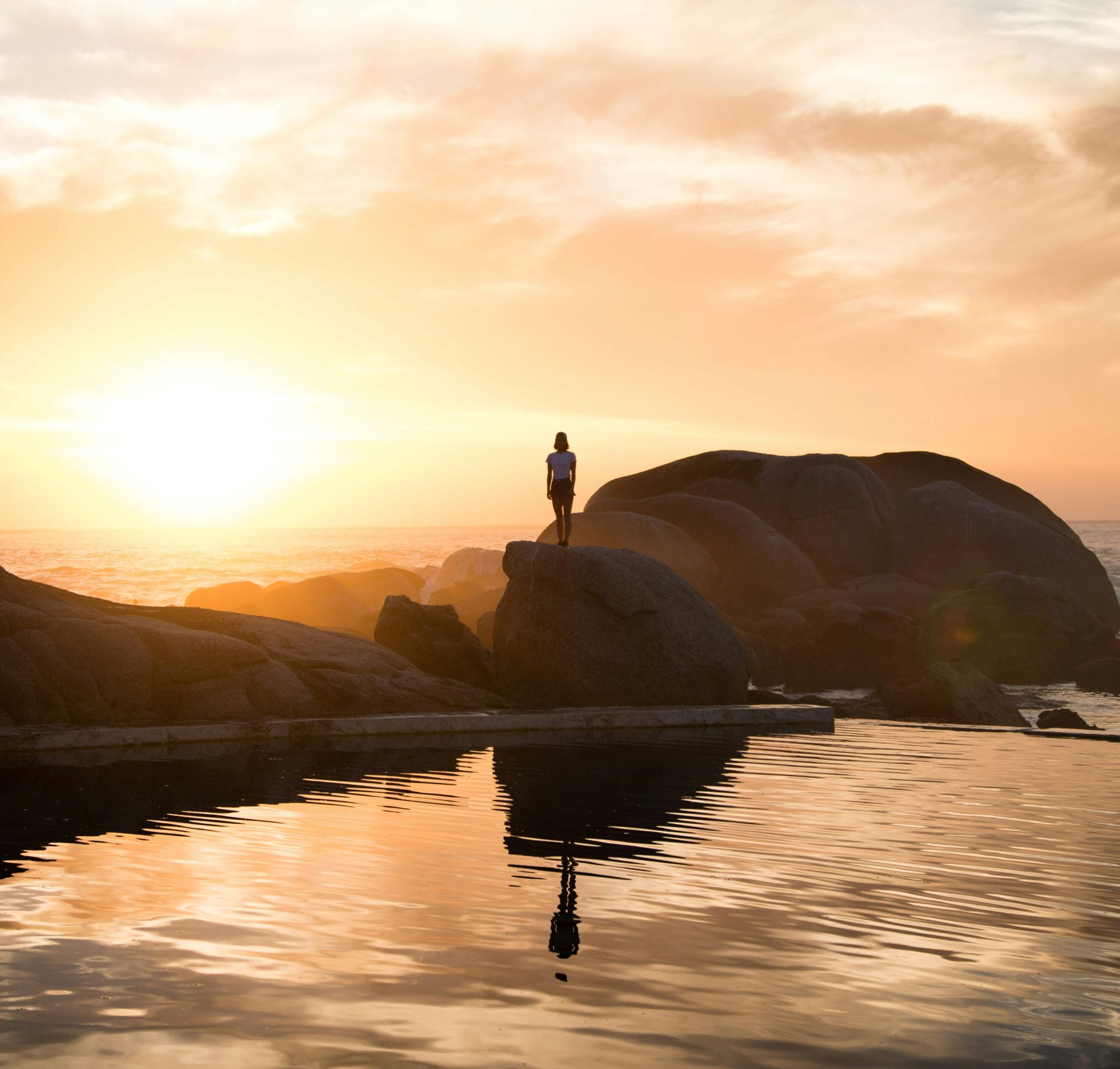
Just a few hours north of Cape Town lies the Cederberg, a mountainous wilderness where wind-sculpted sandstone formations resemble creatures, castles, and contorted faces frozen in time. This rugged region, part of the Cape Floral Kingdom, also boasts some of the finest examples of San rock art in Southern Africa — silent witnesses to a bygone era.
Hikers can follow the trails to sites like Stadsaal Caves, where ochre-painted figures dance across cave walls, or scramble up to Maltese Cross, a towering rock pinnacle standing sentinel over the fynbos-strewn valleys below. In spring, the area bursts into a riot of wildflowers, contrasting against the rust-red rocks and deep blue skies.
Yet the Cederberg isn’t just a visual wonder — it’s a spiritual one. There’s a stillness to this place, a sense of walking not just through space, but through history. It’s no surprise that the area has inspired poets, artists, and conservationists alike.
Table Mountain: The Flat-Topped Icon of the South
Few natural landmarks are as instantly recognisable as Table Mountain. Rising over Cape Town in stark, sandstone majesty, it forms the centrepiece of Table Mountain National Park and offers some of the most panoramic views in the Southern Hemisphere.
While its distinctive silhouette is globally iconic, the mountain’s true magic lies in its biodiversity. Table Mountain is home to over 2,200 plant species — many found nowhere else on Earth. From the hardy protea to delicate orchids, its slopes represent one of the richest floral zones per square kilometre in the world.
Cableway or climb — however you reach the summit — the reward is the same: a 360-degree view of city, sea, and sky that feels nothing short of transcendent. And when the infamous “tablecloth” of cloud rolls in, cascading over the plateau’s edge like a slow-motion waterfall, it’s as if the mountain itself is alive, breathing mist into the city below.
The Tsitsikamma Coastline: Forests, Fynbos and Frothing Seas
Part of the Garden Route National Park, the Tsitsikamma region offers a rare intersection of marine and terrestrial ecosystems. Here, dense Afro-montane forests tumble toward a coastline battered by the Indian Ocean, where fynbos clings to cliffs, and suspension bridges sway above river mouths.
One of its crown jewels is the Storms River Mouth, where adventurers can kayak into sea caves, hike the Otter Trail, or simply sit and watch whales breach beyond the horizon. Inland, towering yellowwoods — some over 800 years old — rise like sentinels in the Tsitsikamma Forest.
The name Tsitsikamma, derived from the Khoekhoe language, means “place of abundant water”. And indeed, everywhere you look, water is moving — cascading from cliffs, whispering through mossy glades, or crashing violently into black rock. It’s a place that pulses with energy, yet invites deep stillness.
The Richtersveld: Desert Bloom and Sacred Land
Remote, rugged, and raw — the Richtersveld Transfrontier Park, straddling South Africa and Namibia, is unlike anywhere else in the country. A UNESCO World Heritage Site, this desert wilderness is both a geological wonderland and a cultural treasure.
Here, jagged mountains rise from gravel plains, and valleys are home to rare succulents like the halfmens — a bizarre, human-shaped plant that appears to gaze mournfully northward. The park’s extreme conditions — daytime heat, nighttime chill, and minimal rainfall — have created an ecosystem of remarkable resilience.
But the Richtersveld is not empty. It is the ancestral home of the Nama people, whose semi-nomadic lifestyle and oral traditions have preserved a deep, respectful relationship with the land. Visitors can stay at community-run campsites, learn about traditional practices, and experience a landscape shaped not just by time, but by stewardship.
A Tapestry of Natural Wonder
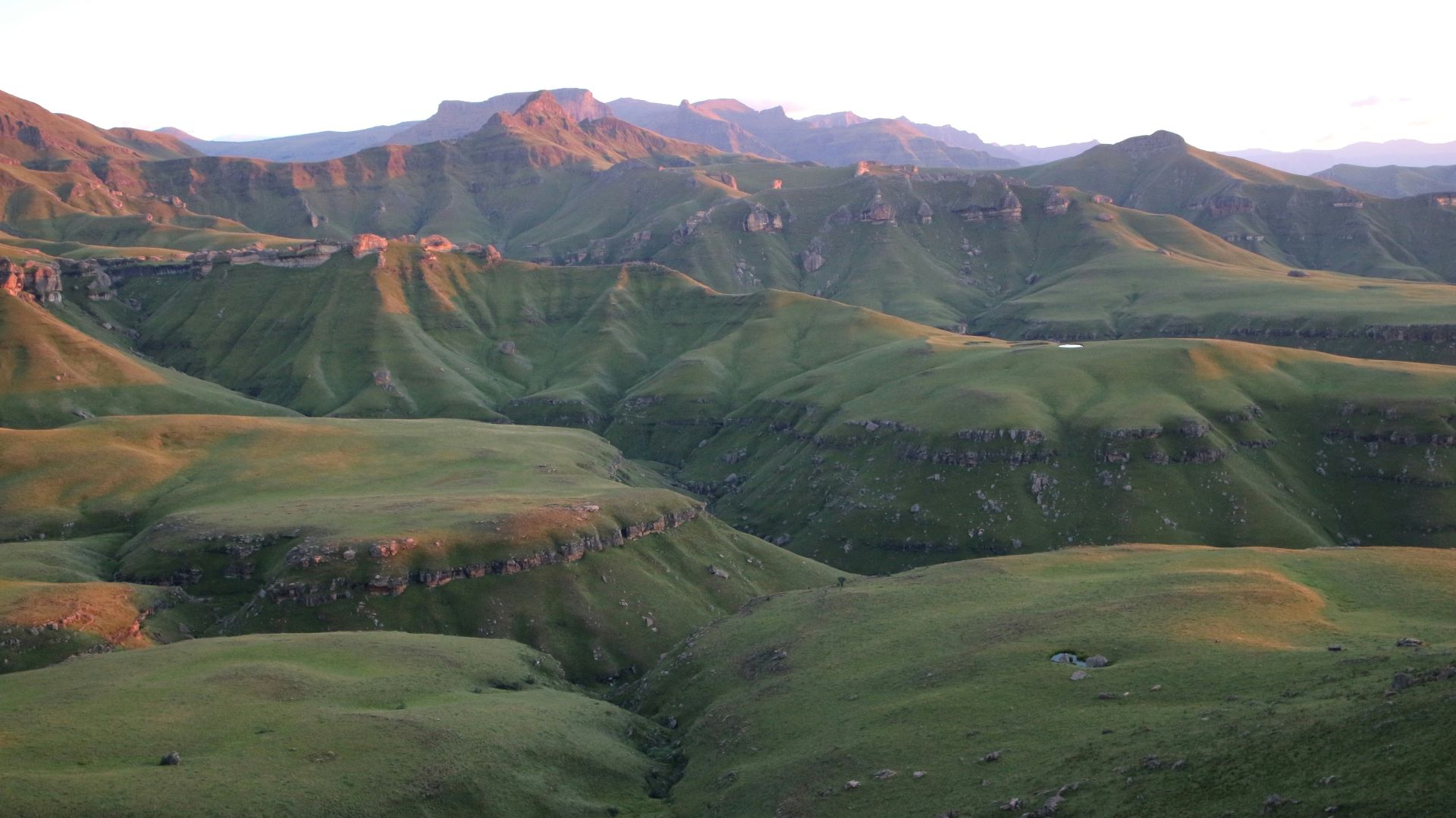
South Africa’s natural wonders are not confined to the glossy pages of travel brochures — they are living, breathing spaces where geology, ecology, and culture collide. From the ancient depths of the Cango Caves to the crashing waves of the Wild Coast, the country’s diverse landscapes offer more than just scenery; they offer perspective.
In each rock layer, each gust of sea wind, each echo in a cave — there is a story. And as travellers, we’re invited not just to witness these places, but to listen to them. To learn from their stillness. To marvel at their resilience. And to remember that in a world hurtling forward, South Africa’s natural wonders remain timeless.
Ronel Ferreira
Reporting from the frontlines of the South African tourism renaissance. Bridging the gap between regional stories and global audiences through elite narrative strategy.