

The Flame That Unites
Few rituals hold the same power to gather South Africans around a common experience as the braai. The word itself is simple, direct, earthy, and yet it carries within it the weight of history, tradition, and identity. From the crackle of wood and the scent of smoke to the slow transformation of raw meat into something primal and communal, the braai is far more than just a way of cooking. It is a language, a performance, a tradition that has woven itself so deeply into the social fabric of the nation that to speak of South Africa without speaking of the braai feels incomplete.
At first glance, it may seem like a rustic activity: meat over coals, people gathered with beers in hand, laughter cutting through the smoke. But scratch below the surface, and you’ll find an entire cultural cosmos. The braai is a reflection of South Africa’s contradictions and harmonies—its tribal roots, colonial legacies, modern urban pace, and enduring desire for connection.
This article delves into the world of the braai: its history, its evolving role in society, its capacity to bridge divides, and its enduring symbolism in the ever-evolving national identity of South Africa.
Origins of Fire: The Primordial Connection
Long before the idea of “South Africa” even existed, fire was central to human life across the southern tip of the continent. Archaeological sites along the coast reveal some of the earliest evidence of controlled fire use, where Homo sapiens not only survived but thrived because of flame. The fire was warmth, safety, and nourishment—but also ritual. Food cooked on fire became a communal act, eaten together, celebrated as a sign of survival.
Over time, fire transcended utility. Among early Khoisan communities, the firepit was a place for storytelling and ceremony. Among Bantu-speaking peoples, the sharing of roasted meat became a gesture of hospitality, respect, and kinship. These primal associations remain today. The braai, in essence, is a living continuation of humanity’s oldest relationship with flame.
Colonial Smoke: The Dutch, The British, and the Birth of the “Braai”
The modern term “braai” originates from the Afrikaans word braaivleis—literally “grilled meat.” Dutch settlers in the Cape brought with them the traditions of open-fire cooking, blending with indigenous practices. Over centuries, these traditions melded into a uniquely local form of communal feasting.
The British, too, left their mark—introducing the concept of the garden barbecue, often more genteel and structured than the free-flowing spirit of the braai. Yet, while the colonial elite may have thought of outdoor cooking as novelty, it was the local populations who truly embedded it into daily life. The rugged landscapes, abundant wildlife, and a climate that invited outdoor living all shaped the culture of cooking on flame.
By the mid-20th century, the braai was no longer just a cooking method. It had evolved into a ritual: the fire started with careful ceremony, the meat prepared with pride, the guests lingering as smoke curled into the evening air. It was not a copy of European barbecue—it was something entirely South African.
The Braai as Social Theatre
Every braai has its choreography. There is the fire-maker, the guardian of the coals, whose authority is rarely challenged. There is the host, orchestrating drinks, salads, and conversation. There are the guests, weaving stories while the aroma of sizzling fat and woodsmoke builds anticipation.
Unlike a formal dinner party, where the cook disappears into the kitchen, a braai places the act of cooking at the heart of the gathering. People watch, comment, advise, and occasionally argue about the “right” way to turn a steak or season the wors. These interactions are more than idle chatter—they are performances of belonging. To be part of a braai is to participate in an unspoken social contract: here, around the fire, we are equals, sharing flame and food.
Wood, Charcoal, and Gas: The Material of Flame
The choice of fuel is as symbolic as the meat itself. Purists argue for wood, insisting that the slow-burning embers infuse the meat with character and authenticity. Wood fires are deeply rooted in rural tradition, where acacia, rooikrans, or kameeldoring provided both heat and smoke.
Charcoal, a more urban convenience, brought consistency and speed—perfect for those without access to endless wood piles. Gas braais, meanwhile, remain controversial, often accused of stripping the ritual of its soul. For many, a gas flame lacks the romance of sparks and smoke, reducing the experience to mere cooking.
Yet the debate itself reveals the braai’s enduring significance. The fact that people can passionately argue about fuel choice underscores that this is no ordinary meal. It is identity, ritual, and pride compressed into glowing embers.
Meat, Memory, and Meaning
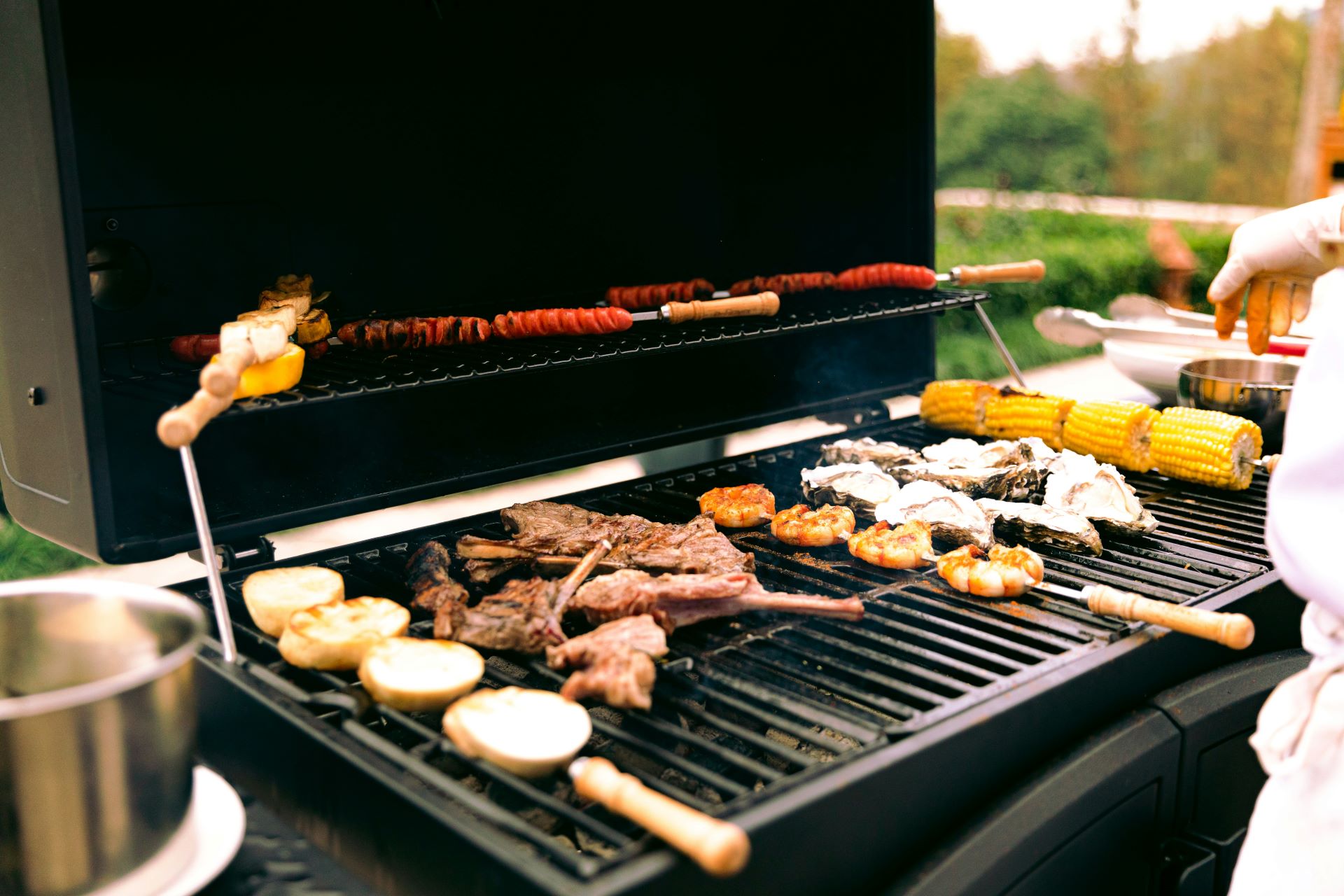
The meat that sizzles on the grid is as much about memory as it is about nourishment. Boerewors spirals evoke childhood Saturdays at home. Lamb chops recall family holidays on the coast. Chicken wings, pork rashers, or beef steaks all carry with them regional and personal associations.
Beyond meat, side dishes—though often treated as secondary—have their own cultural resonance. Pap with tomato sauce speaks to traditional African roots. Potato salad, coleslaw, and garlic bread lean toward European influences. Chutneys and marinades tell stories of Indian and Malay heritage. In every serving, South Africa’s complex cultural blend is plated in ways both subtle and bold.
Braai Day: A Nation at the Fire
In 2005, Archbishop Desmond Tutu helped launch National Braai Day, later rebranded as Heritage Day. The vision was simple yet profound: to create a shared ritual that could celebrate the nation’s diversity while reinforcing unity. “We’re going to have this wonderful thing,” Tutu said, “where we come together around a fire… all of us, black, white, coloured, Indian.”
The move was more than symbolic. At a time when South Africa continued to wrestle with divisions of class, race, and geography, the braai became a chosen emblem of togetherness. It suggested that amid differences, there was still common ground—in smoke, fire, and shared meat. Today, Heritage Day braais are marked in townships and suburbs alike, in gardens, parks, and beaches, turning flame into a national mirror of identity.
Braai in the City, Braai in the Wild
The braai adapts to its setting with remarkable flexibility. In suburban Johannesburg, it might take place on a manicured patio, with stainless steel grids gleaming under electric lights. In rural KwaZulu-Natal, it could mean a circle of stones in a field, wood collected from nearby bush, meat sizzling against a backdrop of stars. On Cape Town’s beaches, portable grids balance precariously on rocks, waves crashing nearby.
No matter where it unfolds, the essence remains. The fire is central, the food is communal, the conversation lingers. The adaptability of the braai reveals its resilience as a tradition: equally at home in modern urban life as in ancient landscapes.
Identity in Smoke: The Braai as Metaphor
The braai is more than a meal; it is a metaphor for South Africa itself. It requires patience—waiting for flames to settle into steady coals, for meat to sear slowly. It thrives on diversity—different meats, spices, and sides combining to form a greater whole. It invites conversation and conflict, but ultimately resolves in shared satisfaction.
In many ways, the braai represents the hope of the Rainbow Nation: a belief that despite differences in taste, tradition, and background, people can gather, eat, and belong together. Around the fire, the divisions of the outside world blur. Smoke, rising into the sky, is an offering of unity.
Global Parallels, Local Uniqueness
Across the world, variations of open-fire cooking exist: the Argentine asado, the American barbecue, the Korean samgyeopsal. Yet the braai is not simply another member of this family. Its place in national consciousness is more intense, more symbolic. In South Africa, to not understand the braai is to not understand a core part of the culture.
The braai has also become an export. South African expatriates light fires in London gardens, Australian backyards, and Canadian parks, recreating the ritual as a taste of home. For those far from the Cape, the braai is not only food but memory, a flame that ties them back to identity.
The Eternal Fire
To speak of South Africa without speaking of the braai would be to miss the heartbeat of the nation. It is the flame that unites, the smoke that binds, the ritual that endures across generations. More than just cooking, the braai is performance, identity, and heritage.
As long as fires are lit, as long as wors sizzles and smoke curls into the African sky, the braai will continue to embody South Africa’s spirit: resilient, diverse, rooted in tradition yet open to change. It is not just meat over flame. It is, in the truest sense, the taste of belonging.
Jabulani
Reporting from the frontlines of the South African tourism renaissance. Bridging the gap between regional stories and global audiences through elite narrative strategy.