

Where the Horizon Breathes
The ocean along South Africa’s edge behaves like an ancient storyteller. It inhales tides, exhales mist, and carries memories across the world’s hemispheres. For a moment, if you stand on a quiet shoreline, you might feel that the sea is not simply water but a grand, slow-moving library of migrations, songs, and old pilgrimages. It is here, along this blue-veined borderland, that whales carve circles of memory through their seasonal journeys, returning year after year to the same bays, reefs, and submarine valleys.
To watch them is to follow a calendar not built on human calendars or academic neatness but one that rises and falls on water temperature, plankton blooms, moon-pulled tides, and instinct older than recorded history. South Africa’s coast becomes a ceremonial corridor, and every returning whale is both visitor and citizen, reciting the same route through time.
What follows is an almanac shaped by tide rather than clock, written for travellers who seek not just sightings but communion. It is for those who understand that marine life must be approached with respect, patience, and a willingness to listen more than they intrude.
The Great Return to the Southern Cape
There are few places on Earth where land seems so clearly designed to welcome whales as the Western Cape. From the Overberg’s rolling fynbos to the basalt teeth of False Bay, the landscape creates amphitheatres of perfect acoustics where migrating whales can breach, calve, flirt, rest, and rehearse their ancient choreography.
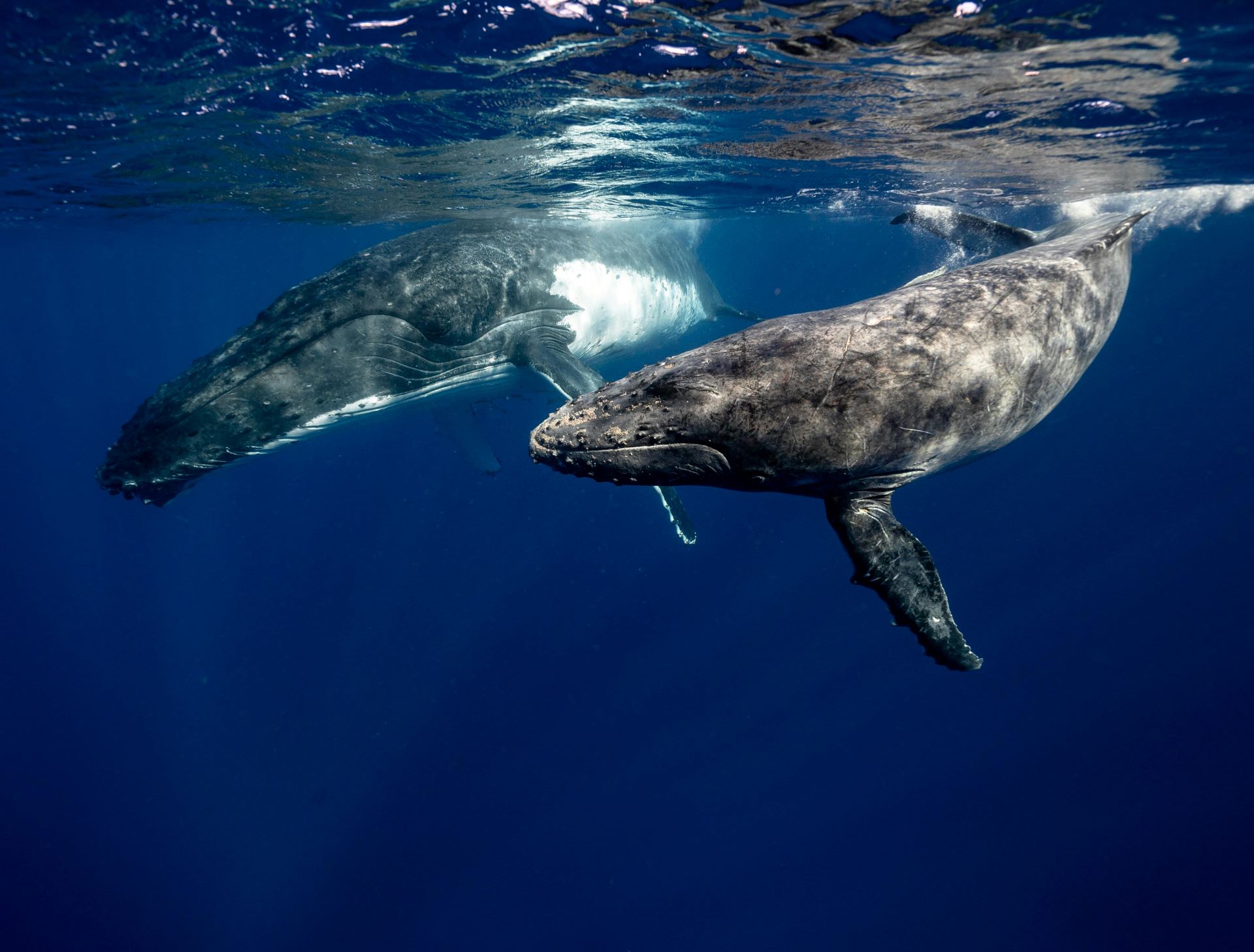
Every year, as winter’s sharpened breath begins loosening its hold on the Cape, southern right whales rise from the sub-Antarctic feeding grounds and make their way toward the continent. They travel with deliberate grace, vast silhouettes threading through cold oceanic highways until the water warms enough to cradle new life. By late June and early July, they are fully present along the coast, and their presence transforms entire towns.
Hermanus, recognised worldwide as one of the premier land-based whale-watching destinations, becomes something like a marine observatory dressed as a coastal town. Its cliff paths grow thick with visitors quietly pointing toward the water. Its air vibrates with the subtle excitement of knowing that a living giant may surface at any moment. Further east, De Hoop Nature Reserve becomes a sanctuary of undisturbed dunes, shallow coves, and quiet beaches that give mothers and calves both privacy and protection. The sheer number of whales in these waters each season feels mythic.
Yet it is not only numbers that define the experience. It is the sense of intimacy created by their behaviour. A southern right whale’s slow pirouette, its gentle spyhop, the rolling reveal of a flipper as white as moonlight on milk—these movements create a kind of poetry visible even from a cliff’s edge. Watching them, you realise that the migration is not a spectacle but a ceremony, and you are only permitted to witness it, never command it.
This is the season when the ocean becomes a cradle. It invites South Africans and travellers alike to step closer, breathe slower, and look out into a world where nature remains unedited.
The Humpback Highways of the East
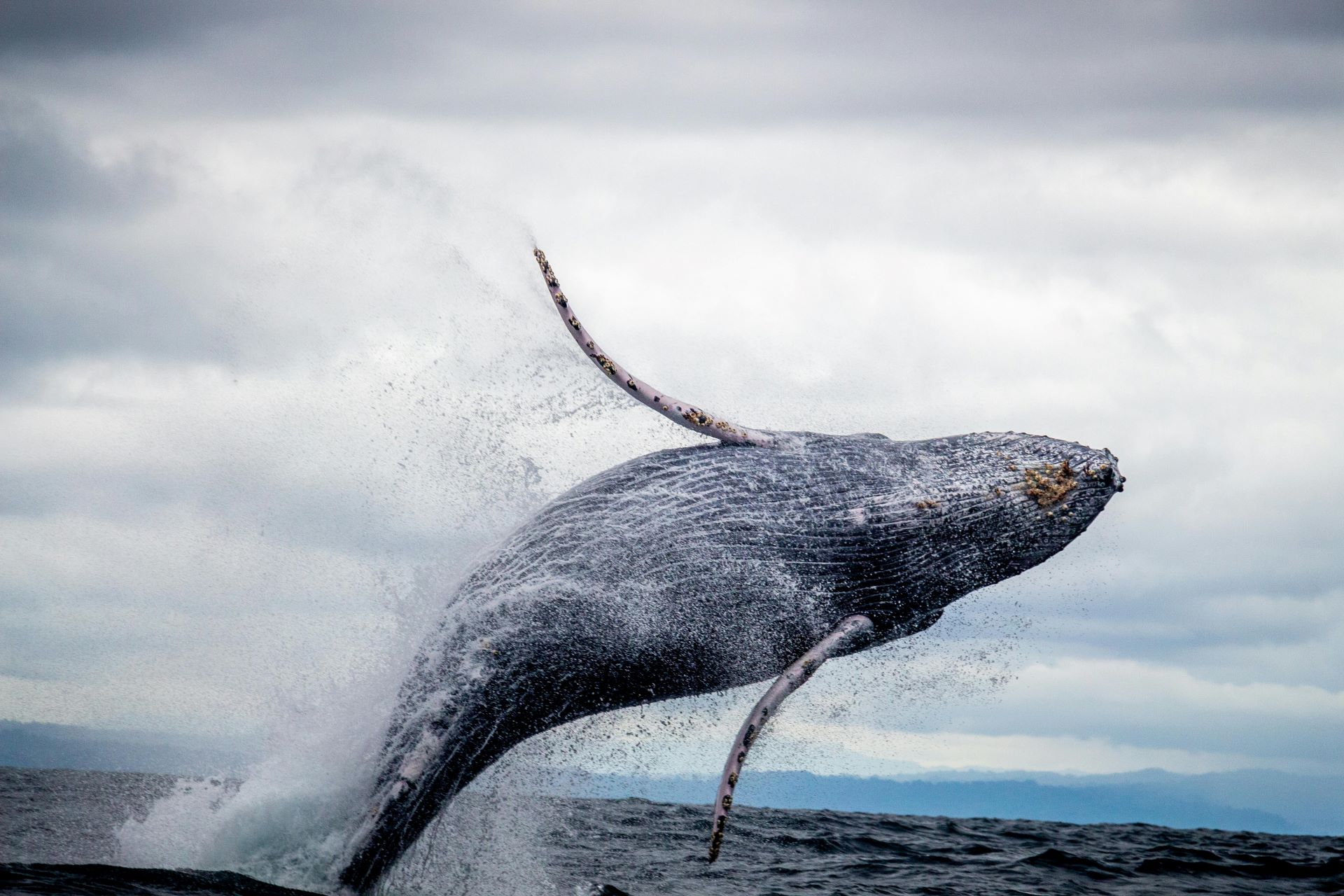
If the southern right whales are the slow, stately priests of the migration calendar, then the humpbacks are the troubadours. They arrive in pulses of energy, lifted by unseen music. Their flukes slice upward like banners. Their breaches carry the theatrical flair of performers who know they have an audience but do not particularly care.
By May, the first humpbacks begin surging past South Africa’s west coast, continuing north along the Eastern Cape and KwaZulu-Natal as they race toward their winter breeding grounds off Mozambique and Tanzania. Their journey is vast. Their hunger is patient. Their stamina is astonishing. To watch them glide through the water is to witness a pilgrimage in motion.
The Wild Coast, untamed and resonant with rugged cliffs, offers spectacular vantage points for this movement. Near Mbotyi and Port St Johns, whale-watchers can sometimes observe pods travelling close to shore, using deep canyons to channel their momentum. The sea seems to thicken with their presence. At times, their passing resembles an underwater procession.
Further north, KwaZulu-Natal becomes a stage of extraordinary marine productivity. From winter through early summer, the warm currents pull life toward the surface, and humpbacks, dolphins, sharks, cape gannets, and sardines converge in one of nature’s most dramatic gatherings. Although the Sardine Run is typically celebrated for its chaotic beauty, it is also a chapter in the whale’s own seasonal almanac. The animals are drawn here by instinct and opportunity, each feeding or travelling according to its own script.
By November and December, many of the humpbacks return, travelling southward with newborn calves in tow. These calves, buoyant and curious, rise with endearing clumsiness. They learn to breathe, dive, and follow the broad shadow of their mother through the open water. If you watch long enough, you may see the first small breach of a calf discovering the power in its own body. The ocean applauds with spray.
Umdloti, Umhlanga, Ballito, and Durban’s long promenade become some of the best viewing zones for this return journey. Early mornings create silhouettes against silver water, and evenings draw amber pathways where tails flick sunlight into shards.
Here, the journey feels more dynamic than ceremonial. You stand before travellers who are still in motion, following a route carved by thousands of generations. It makes you aware that migration is not simply movement but inheritance.
The Hidden Wanderers Beneath the Agulhas Current
Not all whales surface with the regularity of southern rights or the theatrical outbursts of humpbacks. Some migrate quiet as drifting planets, far below the coastal horizon lines. Blue whales, Bryde’s whales, fin whales, even the elusive killer whale—all move along South Africa’s waters, though their presence is more whispered than declared.
These deep-water travellers follow the complex architectures of the Agulhas Current, a warm river in the sea that sweeps north to south with muscular speed. It is one of the strongest currents on Earth, capable of shaping entire ecosystems in its wake. Along its edges, nutrient filaments twist into the water column, drawing fish, krill, and plankton. And as life gathers, so too do the whales.
Their sightings tend to be unpredictable. A flash of dorsal fin near Plettenberg Bay. A sudden disturbance in the water off Cape Point. The eerie call of a fin whale reverberating like a distant cathedral bell somewhere in the fathoms below. These are encounters reserved for the patient, the lucky, or the researchers who map the deep highways of marine giants.
Though seldom marketed as tourism icons in the same manner as southern rights or humpbacks, these whales add a layer of quiet grandeur to the South African whale-watching calendar. They remind travellers that the ocean holds secrets it reveals selectively, and that not all migrations seek applause.
For whale-watching industries, this hidden presence requires thoughtful interpretation. Guides in places such as Plettenberg Bay, Knysna, and Cape Town increasingly blend ecology with storytelling, explaining the fuel lines of the Agulhas Current, the feeding strategies of deep divers, and the fragile balance that allows these species to continue migrating through waters threatened by warming patterns and shifting food availability.
Here, the almanac’s pages grow faint, almost translucent. The migrations continue, but many of them do so beyond our sight.
Sanctuaries of the Southern Coast
Some stretches of South Africa’s shoreline seem shaped by intention rather than accident, as if carved to give whales perfect shelter. These sanctuaries serve as pilgrim stations along their journeys, each offering specific benefits that support distinct phases of migration.
One such sanctuary is the De Hoop Marine Protected Area. Beneath its rolling dunes and fynbos fields lies a coastline perfectly suited for southern right whale calving. The waters are shallow enough to give mothers a sense of safety, yet deep enough to allow calves to grow strong in early development. From August to October, these bays become nurseries, and every splash echoes with new beginnings.
Further west, Walker Bay functions almost like an amphitheatre. Cliffs curve around the water, capturing echoes of whale song and amplifying the visual drama of breaches. Because the bay dips deep close to the shore, whales approach within astonishing proximity. It is one of the few places in the world where a casual walker can look out from land and witness a fully formed display of marine behaviour.
In the Eastern Cape, Algoa Bay provides another essential waypoint, particularly for humpbacks and Bryde’s whales. The bay’s combination of nutrient-rich waters, islands, and reef structures attracts dolphins, gannets, penguins, and whales into a shared marine mosaic. Each species influences the movement of another, creating a constantly shifting tapestry of life.
These sanctuaries are not merely tourism assets. They are vital ecological instruments in the survival of migrating whales. South Africa’s investment in marine protected areas has expanded steadily, guided by scientists who understand that safeguarding migration corridors is as important as protecting calving grounds.
Every sanctuary along the route is a chapter in the whales’ biography, and travellers who visit them take part in a story far older than tourism itself.
Voices in the Water
Whales do not migrate silently. Their journeys are threaded together by sound, and the ocean becomes something like a cathedral chamber for communication. These underwater voices shape courtship, navigation, play, and recognition. When a humpback sings its labyrinthine melodies, it is not simply calling but sculpting patterns within water. Southern rights, with their low grunts and rhythmic moans, speak in a language that vibrates through bone and tide.
South Africa’s coastal acoustic environment is unusually rich. Deep submarine canyons off the Wild Coast create long echo corridors. The wide, curving bays of the Western Cape form natural sound chambers. Researchers using hydrophones document everything from humpback duets to the clicking patterns of foraging dolphins.
For travellers, the ability to hear these voices is rare, but not impossible. Some authorised operators use underwater microphones during tours, amplifying whale calls without intruding upon the animals. The experience of listening to a southern right mother communicating with her calf, her voice travelling through the water like a slow, rhythmic pulse, can feel profoundly grounding.
These sounds remind us that whales experience the world differently. Their migrations are navigated by echoes rather than landmarks, pressure shifts rather than signposts, and generational memory rather than maps. To witness their journey is to momentarily borrow their senses, to let go of human speed and adopt a slower, deeper attention.
In many South African coastal towns, local conservationists and tourism operators work together to minimise sound pollution. Boat routes are adjusted. Engine noise is monitored. Education campaigns encourage responsible viewing distances. Every action contributes to preserving the ocean as a sonic habitat as well as a physical one.
Without sound, migrations lose their ancient compass.
The Calendar of Coastlines
South Africa’s whale-watching seasons do not begin with precise dates. They flow gradually, shaped by ocean currents rather than holiday calendars. Still, travellers tend to follow broad patterns that align with the whales’ needs.
Winter is the season of arrival. Southern right whales begin appearing along the Western Cape as early as June, with sightings intensifying through September and October. These are the months when cliffs, dunes, and headlands transform into viewing theatres. The air tastes of salt and woodsmoke, the wind carries the first real softness after winter, and the sea becomes a moving wildlife documentary.
Spring brings a blending of species. Southern rights remain near their calving grounds while humpbacks commute past on their return journey. Calves learn to breach, mothers conserve energy, and adolescents experiment with independence. This is also when sunlight grows warmer, painting the water with silver morning flecks and afternoon jade streaks.
Summer, though less dramatic, still carries possibility. Bryde’s whales, ever elusive, pursue anchovy and sardine shoals. Dolphins carve quicksilver trails through the surf. Offshore, the deep-water giants make rare appearances. For photographers, these are the months of clarity, when the ocean’s colour intensifies and the coastal vegetation bursts with green brightness.
Autumn becomes the quiet overture before the next cycle. Whales have moved to richer feeding grounds. The coastline exhales. Local tourism operators shift from peak-season energy to contemplative rhythm. It is during these autumn days that researchers compile their migration logs, updating catalogues of identifiable individuals using fluke patterns, scars, pigmentation, and behavioural notes. Even in their absence, the whales leave stories behind.
Throughout the year, South Africa remains a country tuned to migration. Its coastal towns evolve with the seasons, welcoming travellers who understand that every visit adds another footnote to the ongoing marine narrative.
The Ethical Eye of the Traveller
Whale-watching, when done respectfully, becomes one of the most powerful forms of eco-tourism. When done irresponsibly, it becomes a source of disruption. South Africa has spent decades building a framework that protects the whales’ natural behaviour while still allowing visitors to appreciate them.
Responsible whale-watching begins with restraint. Boats maintain regulated distances. Engines are kept low. Approaches must be slow, parallel, and never from behind or directly in front. On land, observers are encouraged to remain quiet near nurseries or calves. Drone usage is tightly controlled. Every rule reflects the principle that humans are guests in the whales’ domain.
Travellers seeking ethical encounters tend to favour operators who place conservation above spectacle. In Hermanus, Plettenberg Bay, Gqeberha, and Durban, several such operators integrate field research with tourism, often collaborating with universities or marine NGOs. Travellers indirectly support conservation through their ticket purchases, which help fund shoreline monitoring, strandings response teams, and public education initiatives.
Respect also means adjusting expectations. Some days, whales remain deep. Some days, fog blinds visibility. Some days, the sea curls inwards and retains its secrets. A respectful whale-watcher accepts the unpredictability, recognising that wildlife is not theatre.
Many South African coastal communities also work to integrate cultural storytelling into marine tourism. Traditional songs, Xhosa creation myths involving oceanic spirits, and Cape Malay maritime folklore all intertwine with contemporary conservation science. This dual narrative enriches the traveller’s understanding that whales are not simply marine mammals but symbols woven into the cultural imagination of the region.
To watch whales ethically is to participate in a generational act of guardianship.
The Future Written in Tide and Time
Climate change is reshaping the ocean’s story at a pace faster than the whales can adapt. Shifts in temperature alter krill distribution. Storm patterns modify coastal behaviour. The strength of the Agulhas Current continues to intensify, influencing migration timing and feeding zones. For South Africa’s whale-watching almanac to remain relevant, it must acknowledge these transformations.
Scientists have already observed subtle changes. Some southern rights are now delaying their arrival. Some humpbacks are travelling earlier or farther. Sightings fluctuate in areas once considered predictable. Yet the whales endure, adjusting their patterns in ways that reveal both vulnerability and resilience.
South Africa’s marine conservation efforts remain strong. Expanding marine protected areas, regulating fishing zones, and improving pollution control are essential. Community-based conservation—particularly in rural coastal regions—continues to play a vital role. Traditional fishing communities often possess ocean knowledge inherited through long oral histories, providing insight into changes across generations.
Tourism also evolves. There is growing emphasis on educational tours, immersive ecological interpretation, and visitor involvement in citizen-science programmes. Travellers can now adopt or identify individual whales, contribute to photo-ID databases, and support local marine research organisations. Their participation helps fill vital knowledge gaps in understanding long-term migration trends.
The future of whale migrations is unwritten but not unprotected. With sustained conservation and respectful tourism, the whales’ circling journeys may continue to echo along South Africa’s coastline for centuries.
Where Sea and Sky Keep Their Promises
Stand anywhere along South Africa’s shoreline and you will notice how the horizon behaves like a vow. It promises that something ancient is still moving beneath the glittering surface. It insists that migrations remain possible in a world crowded with noise and haste. It reminds you that the ocean, vast and seemingly indifferent, carries stories that return season after season.
Whales are not simply creatures of scale and spectacle. They are historians of water, keepers of momentum, bearers of the planet’s oldest roadmaps. Their migrations are braided through South Africa’s identity, both ecological and cultural. For the traveller who approaches them with reverence, the experience becomes transformative.
This almanac is not merely a guide to when and where to look. It is an invitation to learn the coastline’s seasonal language, to witness a journey older than human borders, and to understand that whale-watching is not entertainment but participation in a shared Earthbound rhythm.
The ocean will keep its promises for as long as we help protect its storytellers.
Mandla Ndlovu
Reporting from the frontlines of the South African tourism renaissance. Bridging the gap between regional stories and global audiences through elite narrative strategy.