

South Africa is a land where landscapes themselves seem to whisper stories, and every corner of its vast territory carries the imprint of legend. From the rolling hills of the Drakensberg to the windswept coasts of the Western Cape, the country brims with myths, historical tales, and ghost stories that capture the imagination and offer travellers an experience beyond the ordinary. For those seeking to explore South Africa through the lens of local folklore, the following itineraries blend culture, history, and a touch of the supernatural into journeys you’ll never forget.
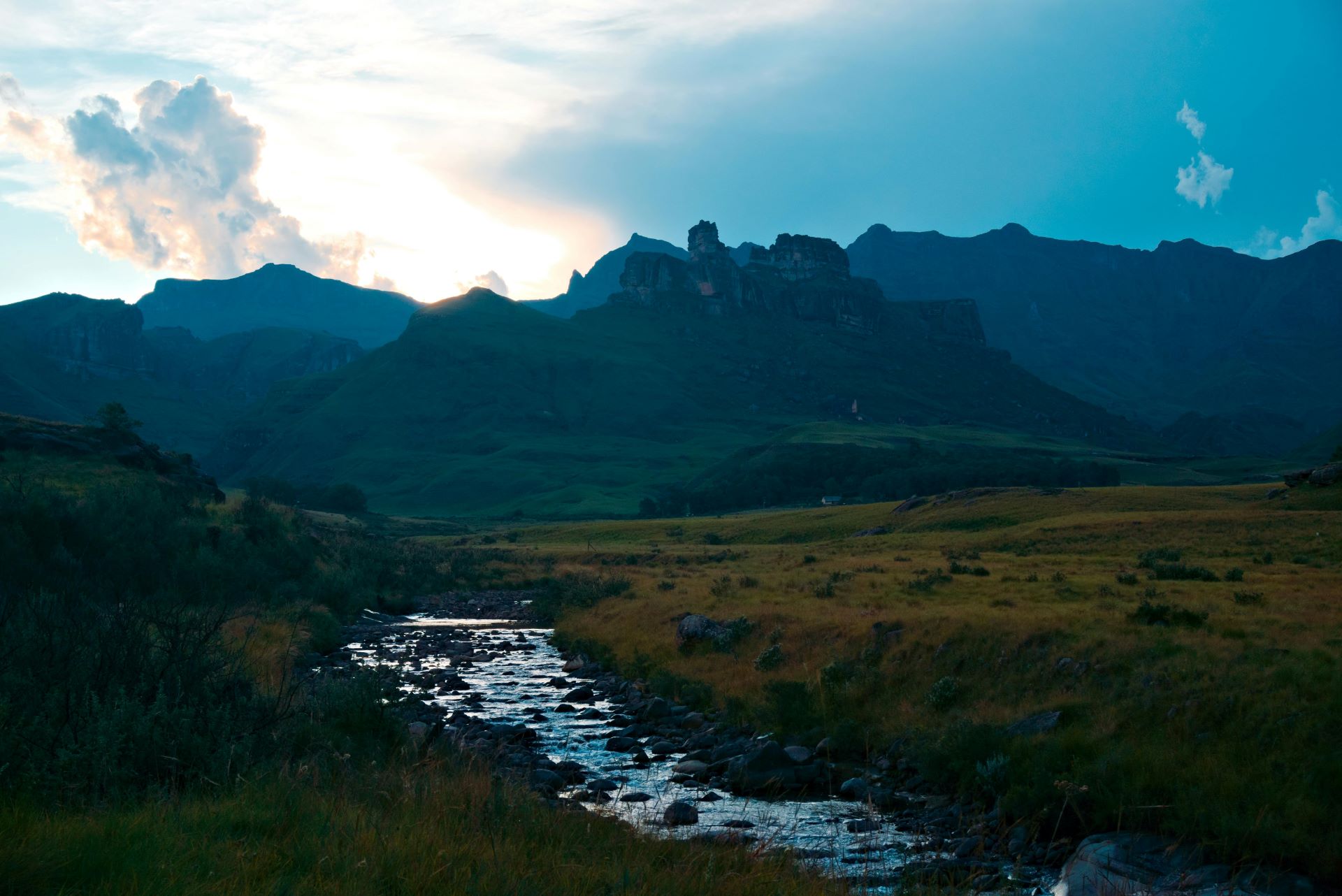
Echoes of the Ancestors: The Drakensberg's Mystical Heights
The Drakensberg Mountains, with their jagged peaks and hidden valleys, are more than just a natural marvel; they are a living testament to the myths of the San people. These mountains, called uKhahlamba or "Barrier of Spears," are rich in San rock art depicting hunting scenes, ancestral spirits, and the enigmatic creatures of local myth.
A journey through the northern Drakensberg invites travellers to explore the Amphitheatre, a dramatic escarpment that stretches over 5 kilometres, and the Tugela Falls, cascading with mythic grandeur. Guided hikes can reveal tales of the “Inkosana YeDlozi,” the San belief in ancestral spirits who guide the living, and the “Chameleon of the Mountain,” a mystical creature said to bring omens of rain. Visiting early in the morning, when mists weave through the peaks, creates a surreal atmosphere where one feels the stories themselves are alive.
Nearby, the Giant’s Castle Game Reserve offers curated walks past rock shelters and ancient engravings. Storytellers often accompany visitors, recounting the legends behind each panel, revealing a culture that sees no clear divide between myth and reality. Travellers can camp under the stars, listening to whispered tales carried on the wind, and sense the presence of ancestors in a landscape that has inspired reverence for centuries.
Haunted Histories: Cape Town’s Spectral Streets
Cape Town is often celebrated for its sunlit beaches and Table Mountain vistas, yet beneath its vibrant streets lies a shadowy world of ghost stories and historical intrigue. The Castle of Good Hope, the oldest colonial building in South Africa, is renowned for its eerie atmosphere. Visitors report ghostly footsteps and whispers from the past, most notably the legendary "Grey Lady," said to be the spirit of a former Dutch settler who walks the corridors at midnight.
A walking tour through the city’s Bo-Kaap neighbourhood adds layers to the spectral narrative. Colourful houses with Cape Malay heritage hide tales of the “Lost Children of District Six,” a community disrupted by apartheid-era displacement, whose memory is kept alive through oral storytelling and local theatre. The tour winds through cobbled lanes, where storytellers recount mysterious disappearances and lingering spirits, inviting travellers to engage with history in a uniquely visceral way.
For a more chilling experience, a short drive to Simon’s Town unveils the ghosts of naval history. Visitors can explore the deserted Quays and hear tales of sailors who vanished without a trace, and local legends of spectral ships appearing in foggy nights, reflecting a maritime folklore that blends European influences with African mysticism. Cape Town’s haunted streets and harbours offer travellers the chance to see the city not only as a place of beauty but as a tapestry of living legends.
Witchcraft and Wisdom: KwaZulu-Natal’s Cultural Mysteries
KwaZulu-Natal, a province rich in Zulu heritage, invites travellers to explore myths deeply entwined with spirituality, medicine, and local history. Traditional Zulu belief systems regard certain landscapes as sacred, housing ancestral spirits, while others are seen as the domain of witches and magical creatures.
Travellers can begin in the Valley of 1,000 Hills, where cultural tours introduce visitors to the concept of “amadlozi,” ancestral spirits who influence daily life. Storytellers guide guests through homesteads, explaining how folklore informs rituals, from healing ceremonies to rainmaking dances. Visits to markets reveal local crafts imbued with symbolic meaning, from protective amulets to talismans designed to ward off evil spirits.
A journey to the Eshowe region offers encounters with Sangomas, traditional healers who act as cultural custodians and storytellers. Sangomas share tales of the “Inkanyamba,” a mythical serpent believed to live in deep rivers and capable of controlling the weather. These encounters allow travellers to engage directly with living mythology, blending adventure and cultural education in a way that goes beyond typical tourism.
Ghostly Gold: Pilgrim’s Progress Through the Highveld
The Highveld, particularly around Johannesburg and Pretoria, offers a historical landscape shaped by the gold rush era. Abandoned mining towns, once bustling with fortune seekers, now carry a haunted allure. Places such as the ghost town of Ferreirasdorp, the city’s oldest suburb, are shrouded in tales of restless miners, lost treasures, and unexplained sounds echoing through empty streets.
Tourists can embark on heritage walks that follow the tracks of prospectors, guided by historians who recount not only the economic impact of gold discovery but the darker stories hidden beneath it. Legends of the “Witgat,” a spectral miner said to guard lost riches, and tales of mine collapses and mysterious disappearances enrich the itinerary. Visiting these towns at dusk, when shadows lengthen over abandoned structures, transforms history into a theatrical experience.
The nearby Cradle of Humankind, a UNESCO World Heritage Site, blends natural history with myth. The limestone caves and fossil sites inspire stories of early humans, and local guides weave narratives of spirits and mythical ancestors inhabiting the very earth where modern science studies evolution. Here, folklore and anthropology intersect, offering travellers both education and enchantment.
Coastal Legends: The Wild Shores of the Eastern Cape
The Eastern Cape’s coastline, rugged and wind-swept, is a treasure trove of maritime myth. Small towns such as Port St. Francis and Coffee Bay offer more than surfing and whale-watching; they are steeped in the legends of sailors, shipwrecks, and the enigmatic “Lindworm of the Waves,” a sea serpent said to protect hidden coves.
Travellers can explore the Hole-in-the-Wall, a natural rock formation along the Wild Coast, which local Xhosa communities regard as sacred. Stories tell of spirits residing within the arch, guarding the land and sea, and of children gifted with visions who communicate with these entities. Coastal walks reveal shell middens, ancient fishing sites, and caves where storytellers recount both Xhosa mythology and colonial-era tales of piracy and shipwrecks.
For a deeper dive into supernatural lore, overnight stays in coastal villages provide immersive experiences where local guides narrate ghostly encounters from fishermen and families who have lived by the sea for generations. The sound of the waves becomes the backdrop for legends that are as old as the rocks themselves, turning a simple coastal holiday into a journey through time and imagination.
Legends in the Karoo: Arid Tales and Phantom Towns
The Karoo, South Africa’s semi-desert heartland, holds myths as vast as its open plains. From the ghost towns left behind by farmers and miners to the wide, star-strewn skies, the region is ripe for storytelling. The town of Richmond, with its historic architecture, evokes tales of wandering spirits and the “Karoo Phantom,” a spectral horseman who roams the plains at night.
Travellers can explore the historic Dutch Reformed churches and old farmhouses, guided by locals who recount stories of hauntings, hidden treasures, and lost loves. The Karoo’s isolation amplifies these tales, and overnight stays in farm cottages or heritage inns allow visitors to experience the stillness where legends were born.
The surrounding nature reserves, such as the Camdeboo National Park, provide both ecological and mythical exploration. Here, indigenous legends tell of the “Giant of the Plains,” a protective spirit of the land, reminding visitors that the Karoo’s apparent barrenness is rich with unseen life, both natural and supernatural.
Myth as a Lens for Travel
South Africa’s landscapes are more than destinations; they are canvases for stories, a blend of myth, history, and culture that transform any journey into an encounter with the extraordinary. Following the trails of local legends, travellers engage with the country on a level beyond sightseeing—immersed in narrative, history, and imagination.
These itineraries offer more than just adventure—they provide a connection to the souls of the people and the land. Each mountain, ghostly street, sacred valley, and coastal formation invites visitors to step beyond the mundane, to feel the pulse of myths, and to carry these stories home, long after the journey ends. In South Africa, folklore is not merely a pastime for the curious—it is a portal into the living, breathing history of a nation whose tales are as wild, wondrous, and enduring as the land itself.
Elisha Roodt
Reporting from the frontlines of the South African tourism renaissance. Bridging the gap between regional stories and global audiences through elite narrative strategy.